
Over 70 percent of moves in the United States take place between Memorial Day and Labor Day, making summer the busiest and most expensive moving season. Choosing the right moving date and securing a reliable moving company can feel complicated when demand peaks and availability shrinks. Whether you are planning a local move or crossing state lines, understanding how timing, company options, and booking strategies work can help you take control and enjoy a less stressful relocation.
| Key Point | Explanation |
|---|---|
| 1. Schedule Moves Early | Plan your move 2 to 4 weeks in advance for optimal results. This timeframe balances preparation and flexibility for local moves. |
| 2. Avoid Peak Moving Seasons | Moving during midweek and mid month often results in lower rates and better availability. Peak times see increased demand and prices. |
| 3. Confirm Details with Movers | Verify moving dates, locations, and details with your company a week before. Written confirmation helps to reduce misunderstandings and ensures a smooth process. |
| 4. Evaluate Multiple Movers | Research at least three moving companies. Compare services, pricing structures, and customer reviews for an informed decision. |
| 5. Prepare for Unexpected Changes | Book your move well in advance to allow time for planning and adjustments. Flexibility helps alleviate stress and potential scheduling issues. |
Successfully timing your move requires strategic planning and understanding your specific relocation needs. Your goal in this step is to develop a clear moving timeline that accounts for distance, logistics, and personal circumstances.
Start by evaluating the scope of your move. According to the Maryland Movers Conference, scheduling your move 2 to 4 weeks in advance provides the best balance between preparation and flexibility. Consider key factors that impact your timeline:
Long distance moves demand more intricate planning compared to local relocations. The Federal Motor Carrier Safety Administration recommends thoroughly researching moving companies and understanding your rights during interstate moves. For cross country relocations, aim to start your planning process at least 8 weeks before your target moving date.
Pro tip: Avoid moving during peak seasons like summer months and end of month periods when moving company demand and rates are highest. Flexibility in your moving dates can potentially save you money and reduce stress.
After establishing your timeline, you will be ready to start researching and selecting potential moving companies that can accommodate your specific needs and schedule.
Understanding peak moving seasons helps you strategically plan your relocation and secure the best moving services at optimal rates. Your mission in this step is to recognize when moving demand is highest and how it might impact your moving experience.
According to Florida Realtors, weekend moves during summer fill up extremely quickly. Most moving companies experience peak demand during specific timeframes that can significantly affect availability and pricing:
The summer season represents the most challenging time for moving. Families often coordinate relocations around school schedules, which creates a concentrated surge in moving activity. Approximately 70% of all moves occur between Memorial Day and Labor Day weekends.

Pro tip: If possible, schedule your move during midweek and mid month. These periods typically have lower demand, offering more flexibility with scheduling and potentially lower rates. Early morning or late afternoon time slots can also provide additional options when popular moving windows are congested.
By understanding these peak seasons, you can make informed decisions about your moving timeline and increase your chances of securing your preferred moving company and date.
Successfully selecting the right moving services requires careful research and strategic planning. Your goal is to thoroughly assess potential moving companies and ensure they can meet your specific relocation needs.
The Federal Motor Carrier Safety Administration recommends comprehensive evaluation of moving service options through their consumer protection toolkit. Start by examining key factors that distinguish quality moving services:
According to the Maryland Movers Conference, scheduling your move 2 to 4 weeks in advance provides the optimal window for securing reliable movers. This timeframe allows you to compare multiple providers and negotiate the best terms for your specific relocation requirements.
Pro tip: Request detailed written estimates from at least three different moving companies. Compare not just the total price but the specific services included and the company’s reputation for reliability and customer service.
By methodically evaluating your moving service options, you will be well positioned to select a moving partner that can deliver a smooth and stress free relocation experience.
Locking in your preferred moving date requires strategic planning and proactive communication with moving companies. Your mission is to secure a booking that aligns perfectly with your relocation timeline and specific needs.
Florida Realtors recommend booking your move at least a month in advance especially for weekend moves during peak summer seasons. This early booking strategy provides several critical advantages:
The ideal booking window varies depending on your move complexity. For local moves, aim to book 4 to 6 weeks ahead. Long distance or interstate relocations require even more advanced planning typically 8 to 12 weeks before your intended moving date.
Pro tip: When contacting moving companies, have your exact moving date, origin and destination addresses, and approximate inventory of items ready. This preparation helps movers provide more accurate estimates and increases your chances of securing your preferred time slot.
By strategically timing your booking, you transform a potentially stressful process into a smooth and controlled transition to your new home or office.
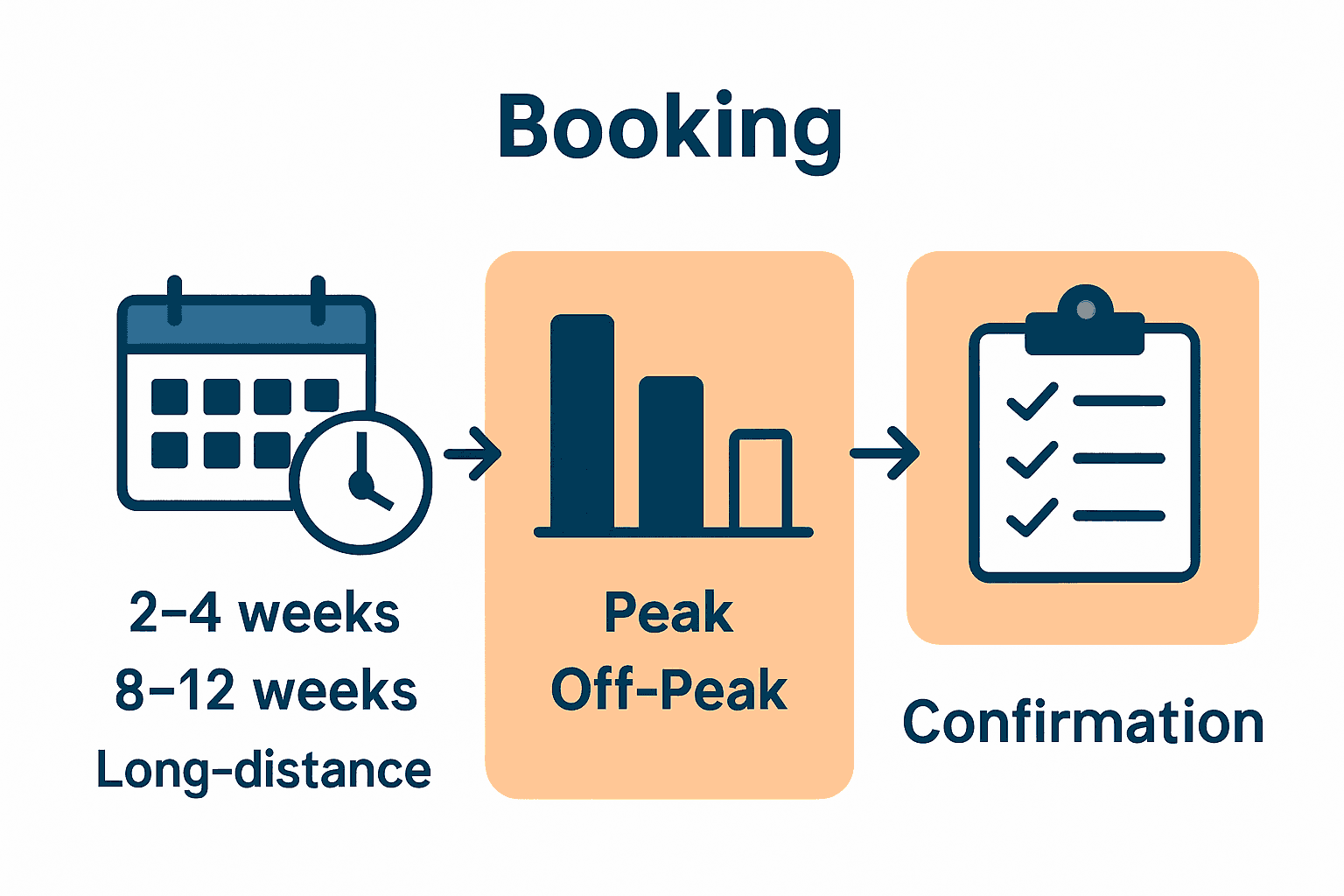
Ensuring the accuracy of your moving reservation requires meticulous attention to detail and proactive communication. Your goal is to eliminate any potential misunderstandings and create a clear roadmap for your upcoming move.
The Federal Motor Carrier Safety Administration recommends comprehensive verification through their consumer protection toolkit. Confirm these critical details with your moving company:
According to the Maryland Movers Conference, maintaining clear written documentation is crucial. Request a formal written confirmation that includes all agreed upon terms and services. This documentation serves as your legal protection and reference point throughout the moving process.
Pro tip: Create a digital and physical copy of your moving confirmation. Take screenshots of email communications and save printed documents in an easily accessible folder. This redundancy ensures you have proof of your agreements if any disputes arise.
By thoroughly verifying your reservation details, you minimize potential complications and set the stage for a smooth and predictable moving experience.
Timing your move right can make all the difference between a stressful experience and a smooth transition. The article highlights common challenges like managing peak season hikes, securing reliable movers in advance, and balancing your personal schedule. You want to avoid last-minute scramble and secure the best service with transparent pricing and trusted professionals.

Get ahead of the rush with US Pro Logistics where expert guidance meets personalized moving solutions. Whether you are coordinating a local move, a long-distance relocation, or require specialized services, their team knows the importance of early planning. Dive deeper into the details with their helpful insights at undefined. Ready to secure your spot on the calendar and enjoy peace of mind? Visit US Pro Logistics now and request your free quote to lock in your ideal moving date today.
Start planning your move at least 2 to 4 weeks in advance for local moves and 8 to 12 weeks for long-distance moves. This timeframe allows adequate time for researching moving companies and negotiating terms.
Peak moving seasons typically occur during the summer months from June to August and around the end of the month. To save on costs and secure better availability, aim to schedule your move during midweek or mid-month.
It’s best to book your moving company at least 4 to 6 weeks in advance for local moves and ideally 2 to 3 months ahead for long-distance relocations. This early booking ensures that you can secure your preferred date and services.
Confirm the exact moving date, pickup and delivery locations, complete inventory of items, agreed services and pricing, and insurance coverage. Ensuring clarity on these details minimizes misunderstandings on moving day.
After booking, ask for a formal written confirmation that includes all key details of your move. Keep both digital and physical copies organized to serve as a reference in case any disputes arise.
Moving during peak times usually results in higher demand and rates from moving companies. To avoid this, schedule your move for midweek or mid-month, which can potentially lower costs and increase your chances of getting your desired time slot.
USDOT 3664256 This number is required for any company that operates commercial vehicles in interstate commerce (across state lines). It helps identify and track the safety performance and compliance of transportation companies.
MC 1268070 This number is specifically for companies involved in the transportation of goods or passengers for hire across state lines. It’s necessary for carriers operating in the moving industry and ensures they are authorized to operate as interstate carriers.

