
Choosing the right moment to hire movers can make the difference between a seamless move and a logistical headache. You might think every month costs the same and slots are always open. But the truth is, moving rates in California can jump by 20 to 30 percent during peak summer months and over 70 percent of moves happen in just a few weeks each year. Picking your move date is less about luck and more about strategy.
| Takeaway | Explanation |
|---|---|
| Hire movers in off-peak season for savings | Relocating between October and April often leads to lower rates due to reduced demand and increased availability. |
| Book at least 2-3 months in advance | Early booking helps ensure competitive pricing and the best chance of securing your preferred moving date. |
| Mid-week moves are more cost-effective | Scheduling your move for Wednesday or Thursday generally results in lower prices and greater flexibility with movers. |
| Verify mover credentials for protection | Always check for active licenses, proper insurance, and customer reviews before hiring any moving company. |
| Strategically plan around personal schedules | Consider family commitments and work schedules to select the most convenient moving date, reducing stress and disruption. |
Deciding when to hire movers involves careful consideration of multiple complex factors that can significantly impact the success and cost of your relocation. Understanding these key elements helps you make informed decisions and plan a smooth moving experience.
Moving costs and availability fluctuate dramatically throughout the year. Peak moving season typically runs from May through September, when demand surges and prices escalate. Research from the California Public Utilities Commission advises obtaining written estimates during these high-demand periods to secure accurate pricing and avoid unexpected charges.
Winter months offer more flexible scheduling and potentially lower rates. However, moving during colder seasons presents unique challenges like unpredictable weather conditions and potential road hazards. Families and businesses must weigh the cost savings against potential logistical complications.
Before hiring movers, verifying their professional credentials is crucial. The California Bureau of Household Goods and Services emphasizes the importance of working with licensed moving companies to ensure consumer protection and regulatory compliance.
Key verification steps include:
These steps help protect your belongings and ensure a professional moving experience. Learn more about our comprehensive moving guide for additional insights into selecting the right moving service.
Timing your move involves intricate personal and professional scheduling considerations. Families with school-aged children often prefer relocating during summer breaks to minimize educational disruption. Corporate relocations might align with fiscal year transitions or strategic business planning periods.
Additionally, consider these critical timing factors:
By strategically planning your move around these variables, you can minimize stress and maximize efficiency. Professional moving companies can provide personalized guidance to help you navigate these complex scheduling challenges and select the optimal moving window for your unique circumstances.
Remember that early planning and proactive communication with your moving company are essential for a seamless relocation experience. Each move is unique, and understanding these key factors will help you make informed decisions that align with your specific needs and constraints.
Choosing the right time to book movers varies significantly depending on your specific moving requirements. Strategic timing can help you optimize costs, ensure availability, and minimize potential logistical challenges.
Research from MoveBuddha reveals that timing plays a critical role in residential moves. Peak moving season runs from Memorial Day to Labor Day, with approximately 70% of all moves occurring during these months. While summer offers ideal weather conditions, it also presents higher costs and limited availability.
Homeowners and renters should consider alternative timing strategies:
Families with school-age children frequently prefer summer moves to minimize educational disruption. However, this widespread preference increases competition for moving services and drives up prices.
North American Van Lines recommends booking corporate moves at least two months in advance. Business relocations require meticulous planning to minimize operational downtime and ensure smooth transitions.
Key considerations for business moves include:
Explore our comprehensive cross-country moving guide for additional insights into managing complex relocation scenarios.
Certain moving scenarios demand unique timing approaches. Military personnel, government employees, and individuals with specialized relocation needs must navigate more complex scheduling requirements.
Specialized moving timing factors include:
These specialized moves often require greater flexibility and more advanced planning. Working closely with experienced moving professionals can help you identify optimal timing windows that minimize stress and maximize efficiency.
Ultimately, successful moving timing depends on balancing personal circumstances, logistical constraints, and financial considerations. Early planning, clear communication with moving professionals, and a flexible approach will help you navigate the complexities of selecting the perfect moving date.
Understanding the intricate relationship between timing, moving costs, and service availability can significantly impact your relocation budget and overall moving experience. Strategic planning helps you navigate the complex pricing dynamics of the moving industry.
To help you understand how moving costs and availability change throughout the year, here is a summary of seasonal price and demand variations for California moves:
| Season | Pricing | Availability | Key Features |
|---|---|---|---|
| Peak Season (May–August) | Highest (20–30%+ increase) | Lowest | 70% of moves occur; ideal weather, high demand |
| Shoulder Season (September, April) | Moderate | Moderate | Prices and availability balanced |
| Off-Peak Season (October–March) | Lowest | Highest | Lower rates, flexible scheduling, potential weather challenges |
Research from Moving Buddha reveals dramatic cost fluctuations across different seasons. Summer months (May through August) represent the peak moving period, with prices escalating by 20–30% compared to winter months. Moving between October and April can potentially save you substantial money due to reduced demand.
Seasonal pricing considerations include:
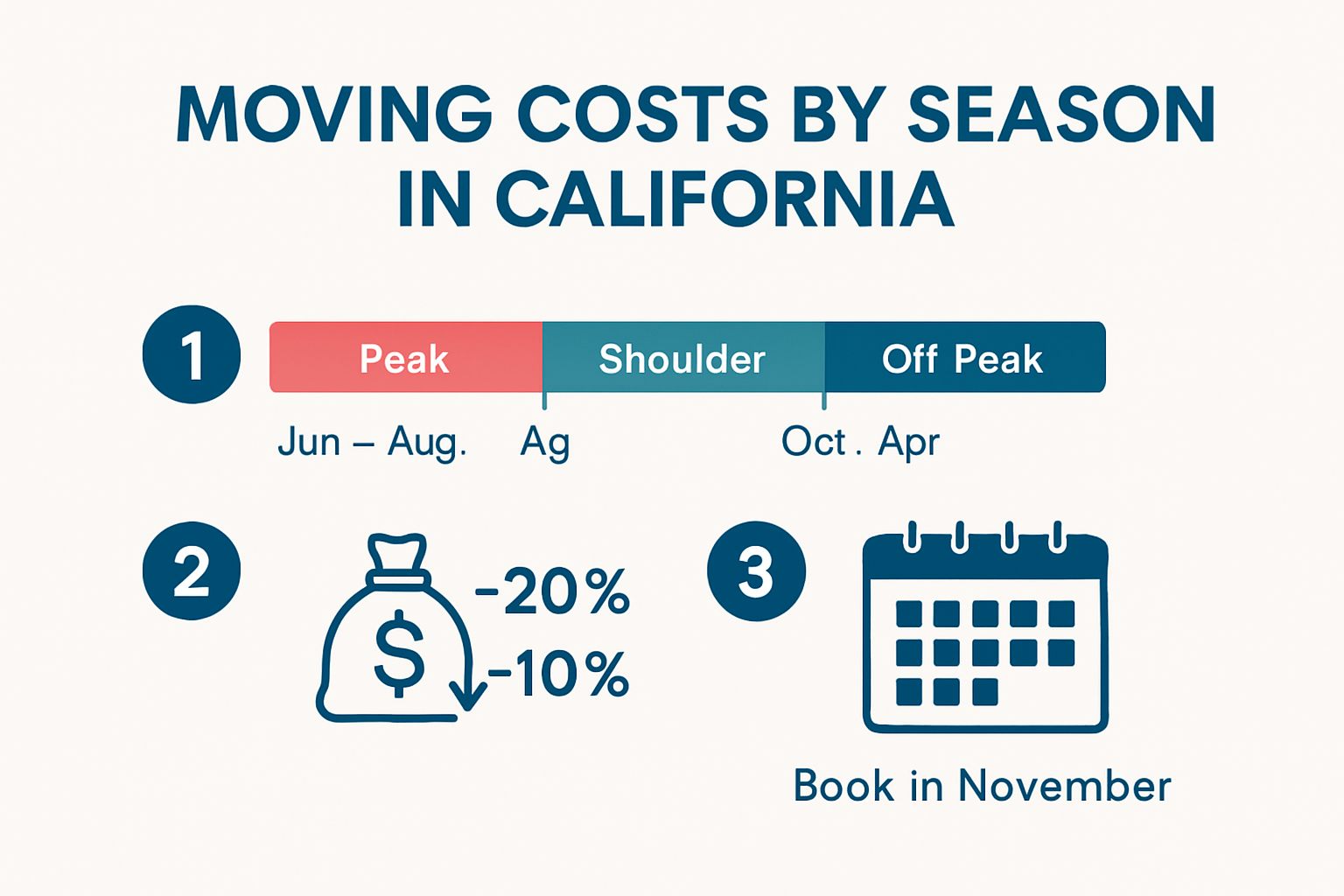
Businesses and individuals can leverage these seasonal variations to optimize their moving budgets. Winter relocations offer significant cost advantages, though they come with potential weather-related challenges.
According to HAR Moving Resources, the day of the week dramatically influences moving costs and service availability. Mid-week days like Wednesday and Thursday typically experience lower moving company activity, translating to more competitive pricing and greater scheduling flexibility.
Strategic timing recommendations:
Check out our comprehensive cross-country moving guide for more detailed insights into cost-effective moving strategies.
Advanced booking plays a crucial role in managing moving costs and ensuring service availability. MOD24 Moving Insights suggests that early reservations can help secure more competitive pricing and guarantee preferred moving dates.
Cost management strategies include:
Professional moving companies often provide more competitive rates for clients who demonstrate flexibility and plan well in advance. By understanding these timing nuances, you can make informed decisions that balance cost-effectiveness with logistical convenience.
Remember that while timing significantly influences moving expenses, individual circumstances and specific requirements should always guide your final decision. Consulting with moving professionals can help you develop a personalized strategy that meets your unique needs while optimizing costs and availability.
Planning the perfect moving date requires strategic thinking and careful consideration of multiple factors. A well-planned move can significantly reduce stress, minimize unexpected complications, and ensure a smooth transition to your new location.
The California Attorney General’s Office recommends obtaining multiple in-person estimates from at least three moving companies to compare costs and understand potential expenses. This approach helps you develop a comprehensive budget and avoid unexpected financial surprises.
Key budgeting strategies include:
Our cross-country moving guide offers additional insights into navigating complex moving financial considerations.
HGTV suggests that the least expensive moving period spans from October through April. During this off-peak season, moving companies typically have more flexible schedules and lower rates. However, this timing comes with potential challenges like unpredictable weather conditions.
Consider these seasonal planning factors:
To streamline your planning, here’s a breakdown of critical preparation steps you should take before your move:
| Step | Description |
|---|---|
| Create a moving checklist | List all key tasks and deadlines for your move |
| Organize important documents | Gather leases, identification, contracts, and receipts |
| Confirm mover credentials | Check licenses, insurance, certifications, and reviews |
| Plan contingencies | Prepare backup plans for possible delays or issues |
| Develop communication strategy | Establish regular contact with your moving company/team |
The Bureau of Household Goods and Services emphasizes the importance of comprehensive documentation and preparation. Proper planning involves more than just selecting a date—it requires meticulous organization and proactive management.
Critical preparation steps include:
Successful move planning is an art that balances logistical precision with personal flexibility. By understanding the nuanced factors that influence moving dates, you can create a comprehensive strategy that minimizes stress and maximizes efficiency.
Remember that while guidelines and recommendations are valuable, your unique circumstances should ultimately drive your moving date decision. Consulting with professional movers can provide personalized insights tailored to your specific relocation needs.

The best time to hire movers in California is during the off-peak season, which typically spans from October to April. During these months, you can often find lower rates and greater availability due to reduced demand.
It is advisable to book your moving company at least 2-3 months in advance. Early booking can help secure competitive pricing and ensure you obtain your preferred moving date.
Mid-week days, particularly Wednesday and Thursday, are generally the best days for moving. These days usually have lower demand, resulting in more competitive pricing and greater scheduling flexibility.
Moving costs are significantly influenced by seasonal variations. During the peak moving season (May to August), prices can increase by 20-30%. The off-peak season (October to March) often offers the lowest rates and the highest availability, making it more affordable to hire movers.
The article uncovered just how much timing matters for your move—seasonal price spikes, scrambling for last-minute availability, and the challenge of navigating work or school schedules can easily overwhelm even the best planners. Whether you are moving a home or relocating a business, these timing decisions can leave you worried about missed opportunities and unnecessary expenses.
If you want to avoid the uncertainty and lock in a smooth moving experience, let US Pro Logistics guide you. Check our full range of moving and logistics solutions built for California’s diverse needs. We offer residential, commercial, government, and specialty moving services—all tailored to take the guesswork out of your next relocation.

Ready to take control of your ideal move? Request your personalized quote now at US Pro Logistics. Secure the moving date you want and the peace of mind you need before this peak season fills up.
USDOT 3664256 This number is required for any company that operates commercial vehicles in interstate commerce (across state lines). It helps identify and track the safety performance and compliance of transportation companies.
MC 1268070 This number is specifically for companies involved in the transportation of goods or passengers for hire across state lines. It’s necessary for carriers operating in the moving industry and ensures they are authorized to operate as interstate carriers.

