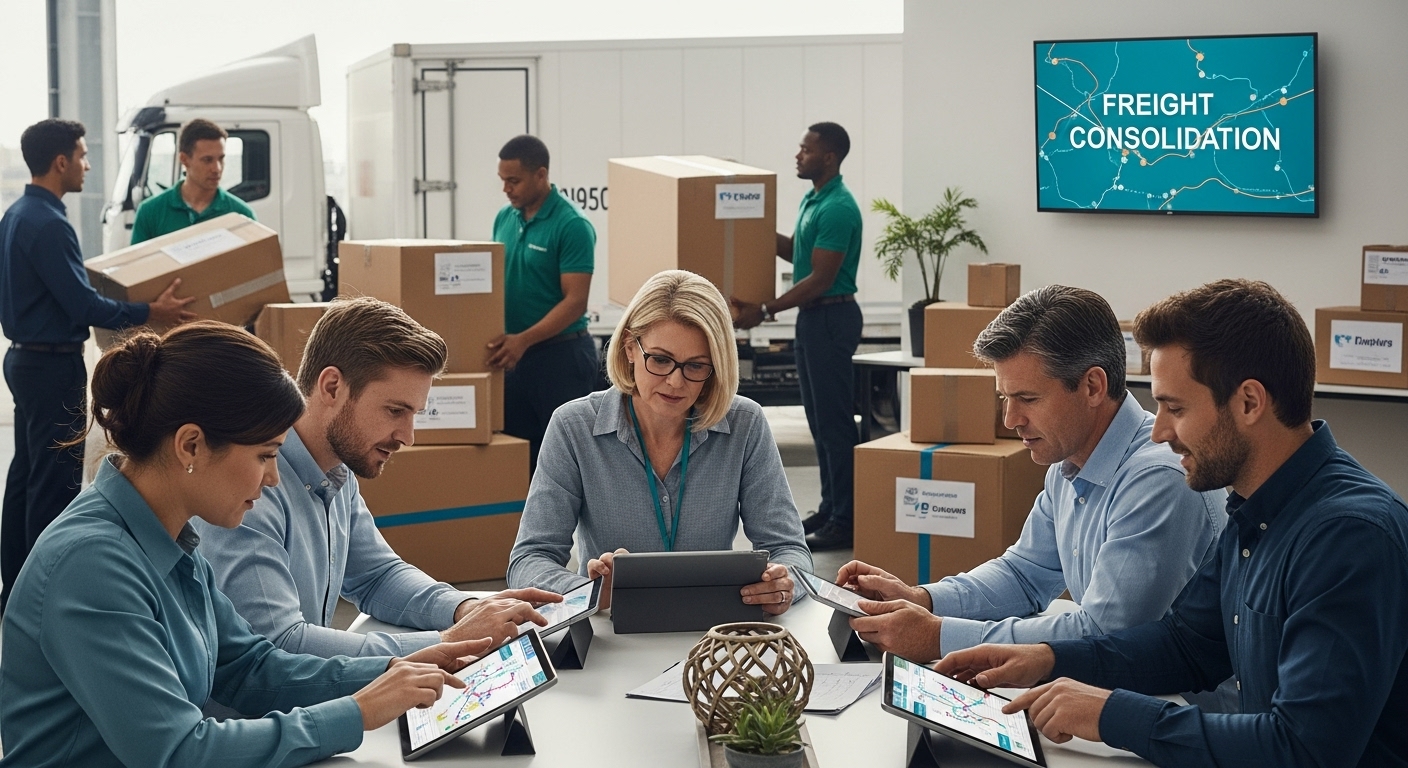
Shipping costs can eat up a huge slice of a company’s budget fast. Freight consolidation can cut those costs by as much as 24 percent compared to traditional methods. Surprised? Most people assume the real value is in simply combining a few boxes. The big twist is that freight consolidation totally changes how businesses handle logistics, making shipping smarter, cheaper, and even greener.
| Takeaway | Explanation |
|---|---|
| Freight consolidation reduces shipping costs. | By pooling smaller shipments into one, businesses significantly decrease individual shipping expenses and overall transport costs. |
| Improves operational efficiency. | Consolidating shipments enhances delivery processes and optimizes routing, resulting in better supply chain management. |
| Lowers environmental impact. | Fewer truck movements lead to reduced carbon emissions and fuel consumption, supporting sustainability efforts. |
| Enables competitive advantage. | By leveraging shared transportation resources, businesses can innovate and improve customer service, staying competitive in the marketplace. |
| Relies on technology for effectiveness. | Advanced tools for tracking and optimizing shipments are crucial for executing freight consolidation successfully. |
Freight consolidation is a strategic logistics approach that combines multiple smaller shipments from different shippers into a single, more efficient transportation load. This method transforms how businesses manage shipping by maximizing transportation resources and reducing overall shipping costs.
At its core, freight consolidation is about optimizing shipping efficiency. Instead of sending multiple small shipments separately, companies pool their cargo to create a full truckload. According to PIARC Transportation Organization, this process involves combining freight consignments from multiple shippers into a single shipment by one carrier.
Key characteristics of freight consolidation include:
The mechanics of freight consolidation involve strategic planning and coordination.
Shippers collaborate with logistics providers who aggregate shipments heading in similar directions. These consolidated shipments are then transported together, which significantly reduces per-unit transportation costs.
For instance, a manufacturing company in California might have a small shipment of components that can be combined with other regional shipments. By consolidating these loads, the company reduces its individual shipping expenses while maintaining delivery timelines. Transportation Research Board confirms that this distribution strategy substantially reduces transportation costs associated with small shipments by increasing vehicle load capacity and overall transportation efficiency.
Businesses across various industries leverage freight consolidation as a smart logistics solution, transforming how goods move through complex supply chains with greater economic and operational precision.
Freight consolidation represents a critical strategy in modern logistics that offers substantial benefits for businesses across various industries. By strategically combining smaller shipments, companies can achieve significant operational and economic advantages that transform their shipping approaches.
The following table summarizes the main economic, operational, and environmental advantages discussed in the article, making it easy to compare the key benefits of freight consolidation.
| Benefit Category | Advantage Description |
|---|---|
| Economic | Reduces per-unit shipping and overall transportation costs |
| Economic | Maximizes vehicle load capacity |
| Economic | Lowers fuel consumption and overhead expenses |
| Operational | Improves delivery efficiency and routing |
| Operational | Enhances supply chain management and inventory control |
| Environmental | Reduces truck movements and carbon emissions |
| Environmental | Decreases total fuel consumption for shipments |
The primary motivation behind freight consolidation is cost reduction. By pooling shipments, businesses can dramatically lower their transportation expenses. According to Sustainable Transport Research, cargo consolidation not only reduces transport costs but also contributes to sustainable development by minimizing environmental impact.
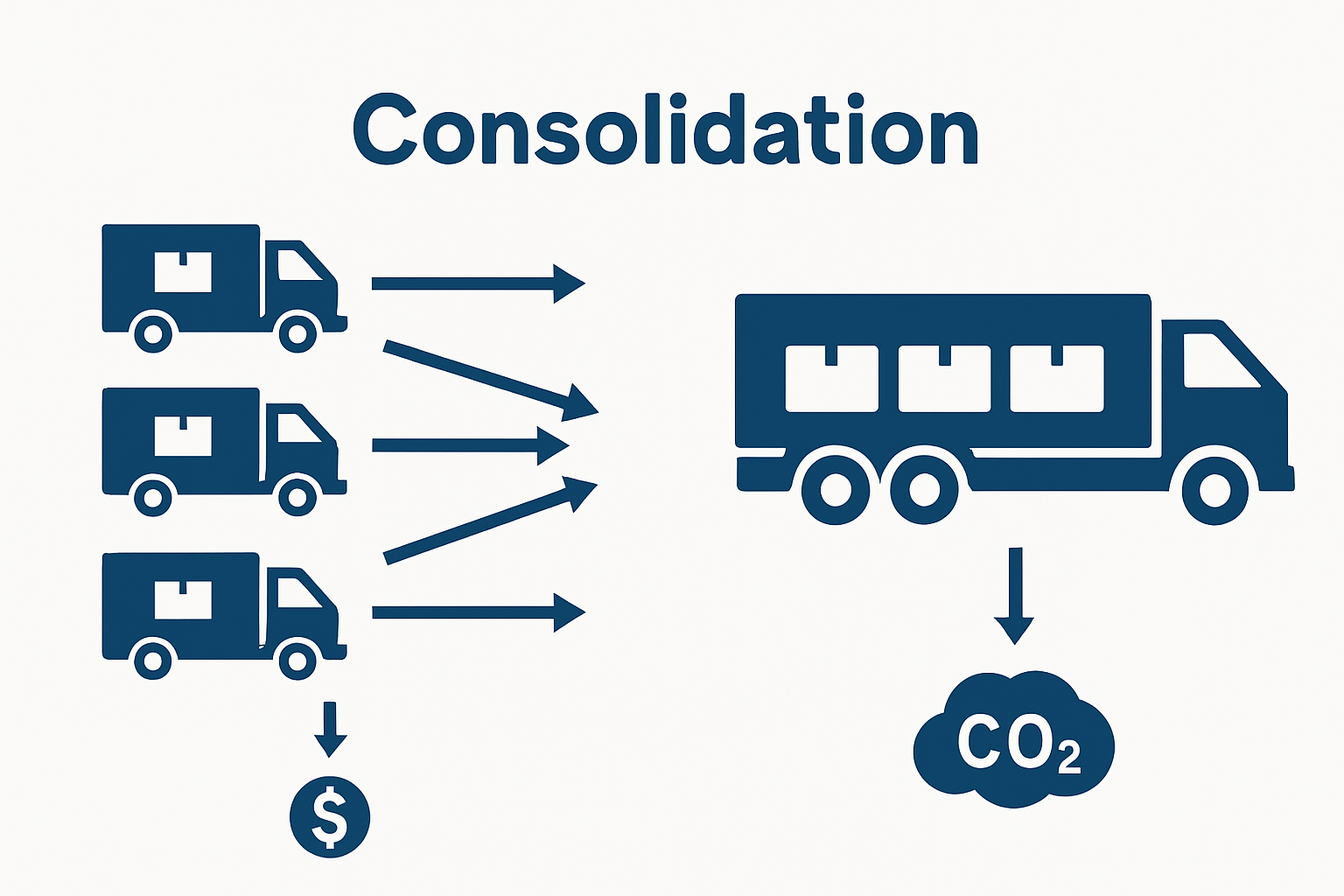
Key economic advantages include:
Beyond financial benefits, freight consolidation offers significant environmental and operational improvements. Combining multiple shipments into a single load reduces the number of individual truck movements, which directly translates to lower carbon emissions and decreased fuel consumption.
Operationally, consolidated shipping allows businesses to:
Improve delivery efficiency
Optimize routing and transportation planning
Reduce carbon footprint
Enhance overall supply chain sustainability
Freight consolidation is more than a cost-saving technique. It represents a strategic approach to shipping that enables businesses to compete more effectively in a global marketplace. By leveraging shared transportation resources, companies can allocate saved resources towards innovation, customer service, and core business development.
Research from the Transportation Research Board indicates that strategic shipment consolidation can significantly improve service levels, particularly for smaller shipments that traditionally face higher per-unit transportation costs.
In an increasingly competitive global economy, freight consolidation emerges as a smart, sustainable logistics strategy that delivers measurable benefits across financial, operational, and environmental dimensions.
Freight consolidation represents a sophisticated logistics strategy that transforms how businesses manage transportation by intelligently combining smaller shipments into more efficient, cost-effective transportation solutions. This complex process involves multiple strategic steps and coordination between various logistics stakeholders.
The freight consolidation framework begins with careful shipment aggregation. Logistics providers analyze multiple smaller shipments originating from different shippers, evaluating their destination proximity, weight, volume, and delivery timelines. According to MIT Logistics Research, advanced simulation models can help companies develop optimal consolidation policies that can generate substantial network cost savings.
Key elements of the consolidation process include:
Modern freight consolidation relies heavily on advanced technological platforms that enable real-time tracking, communication, and coordination. Logistics providers utilize sophisticated software systems that can instantly map and analyze potential shipment combinations, ensuring maximum efficiency and minimal disruption.
Technological capabilities that support freight consolidation include:
Successful freight consolidation goes beyond simple shipment combination. It requires comprehensive network management that considers multiple variables such as geographical distribution, carrier capabilities, and individual shipper requirements.
Logistics professionals must continuously balance complex factors like:
By implementing intelligent consolidation strategies, businesses can transform their shipping operations, achieving significant economic and operational advantages through more efficient resource utilization.
Freight consolidation represents a sophisticated logistics strategy that goes far beyond simple transportation optimization. By transforming how businesses approach shipping, this approach delivers comprehensive advantages across economic, operational, and environmental dimensions.
At its fundamental level, freight consolidation is about strategic resource integration. Instead of treating each shipment as an isolated event, logistics professionals view transportation as an interconnected network where multiple shipments can be strategically combined. According to U.S. Department of Transportation, effective freight and logistics planning helps organizations reduce costs, improve delivery times, and manage inventory more efficiently.
Key conceptual elements include:
Freight consolidation delivers multifaceted economic benefits that extend far beyond simple cost reduction. By aggregating shipments, businesses can achieve significant economies of scale, reducing per-unit transportation expenses and improving overall supply chain performance.
Operational advantages encompass:
Beyond immediate financial benefits, freight consolidation plays a crucial role in broader strategic objectives. By reducing the number of individual transportation movements, companies can significantly decrease their carbon footprint and contribute to more sustainable logistics practices.
Strategic benefits include:
Freight consolidation emerges not just as a tactical shipping approach, but as a comprehensive strategy that aligns economic efficiency with environmental responsibility and long-term business sustainability.
Freight consolidation serves as a versatile logistics strategy that finds application across diverse industries, enabling businesses to optimize their transportation processes and achieve significant operational efficiencies. From manufacturing to retail, companies leverage this approach to transform their supply chain management.
This table organizes common business sectors and specific freight consolidation applications mentioned in the article to provide a quick reference for industry relevance and typical use cases.
| Industry/Sector | Example Applications |
|---|---|
| Manufacturing & Industrial | Consolidating supplier components, inter-plant transport |
| Manufacturing & Industrial | Optimizing raw material and product shipments |
| Retail & E-commerce | Aggregating products from warehouses |
| Retail & E-commerce | Creating regional distribution hubs |
| Technology & Global Supply Chains | Real-time shipment tracking and data-driven optimization |
| Technology & Global Supply Chains | Dynamic load balancing |
Manufacturing businesses frequently utilize freight consolidation to manage complex component and product shipments. By aggregating shipments from multiple suppliers or to various distribution centers, manufacturers can significantly reduce transportation costs and improve logistical efficiency. According to MIT Logistics Research, strategic consolidation policies can generate substantial network cost savings, sometimes up to 24% compared to traditional shipping approaches.
Key applications in manufacturing include:
Retail and e-commerce sectors have revolutionized their supply chain strategies through sophisticated freight consolidation techniques. Online marketplaces and large retailers use advanced consolidation methods to streamline their complex distribution networks, reducing shipping expenses and improving delivery speed.
Strategic consolidation approaches in retail involve:
Modern technology has transformed freight consolidation from a simple cost-saving technique to a sophisticated strategic tool. Advanced data mining and analytics enable businesses to create intelligent consolidation strategies that go beyond traditional transportation planning.
Technological applications include:
Real-time shipment tracking and optimization
Predictive analytics for route planning
Dynamic load balancing across transportation networks
Integrated supply chain management platforms
By embracing freight consolidation, businesses across industries can create more efficient, sustainable, and cost-effective transportation ecosystems that adapt to evolving market demands.

Are you tired of high shipping costs and inefficient delivery schedules? If you are facing challenges with scattered shipments or want to unlock the real benefits of freight consolidation discussed in this article, US Pro Logistics is ready to help. Our team brings years of experience with tailored solutions that maximize delivery efficiency and reduce your logistical headaches. We apply the same principles of shipment optimization and network management described above to every move, whether you need help with freight delivery or require support for commercial relocations, government logistics, or secure storage.
See why our customers trust the US Pro Logistics difference. Get a customized quote today or talk to a specialist who understands the unique challenges of consolidated shipping. Do not let fragmented transport hold your business back. Visit US Pro Logistics and discover the smarter way to manage your logistics needs right now.
Freight consolidation is a logistics strategy that combines multiple smaller shipments from different shippers into a single, more efficient transportation load, reducing shipping costs and maximizing resource use.
The key benefits include reduced shipping expenses, increased transportation efficiency, lower carbon emissions, and the availability of more economical shipping options for smaller businesses.
Freight consolidation works by aggregating shipments with similar destinations and coordinating their transport together, significantly lowering per-unit transportation costs and improving delivery efficiency.
Industries such as manufacturing, retail, and e-commerce commonly use freight consolidation to manage complex shipment logistics, reduce costs, and enhance supply chain efficiency.
USDOT 3664256 This number is required for any company that operates commercial vehicles in interstate commerce (across state lines). It helps identify and track the safety performance and compliance of transportation companies.
MC 1268070 This number is specifically for companies involved in the transportation of goods or passengers for hire across state lines. It’s necessary for carriers operating in the moving industry and ensures they are authorized to operate as interstate carriers.

