
Did you know that over 35 million Americans move every year, with many relying on temporary housing during transitions? Whether due to a new job, natural disasters, or personal changes, finding a comfortable place for a short period can be a major stressor. Understanding what options exist and how they work can help you feel prepared, save money, and settle in quickly when life shifts you into a new chapter.
| Point | Details |
|---|---|
| Temporary Housing Importance | Serves as a critical solution for individuals facing life transitions, providing short-term shelter and support. |
| Types of Temporary Housing | Includes transitional shelters, emergency housing, corporate housing, and vacation rentals, each catering to specific needs. |
| Cost Considerations | Pricing structures can vary significantly; careful financial planning is essential to understand total costs beyond base rates. |
| Selection Criteria | Evaluate lease flexibility, essential amenities, location quality, and security features to ensure the best fit for temporary living needs. |
Temporary housing represents a critical transitional solution for individuals and families experiencing significant life changes, displacement, or housing instability. These accommodations bridge the gap between immediate housing needs and permanent residential arrangements, offering flexible living spaces designed to provide short-term shelter and support.
According to research from transitional shelter studies, these housing options serve diverse populations including disaster survivors, individuals recovering from personal challenges, and those navigating complex life transitions.
Temporary housing encompasses several distinct categories tailored to different circumstances and needs. After events like Hurricane Katrina, understanding temporary storage options becomes crucial for displaced populations. Key types include:
Research indicates transitional shelters typically support residents for periods ranging from several months up to two years, often integrating critical wraparound services like job training, counseling, and childcare. These nuanced housing solutions represent more than just physical spaces they are dynamic platforms enabling individuals to stabilize their lives and transition toward permanent housing solutions.
Temporary housing solutions in the United States offer a diverse range of options designed to meet varying needs, budgets, and durations of stay. According to research from housing platforms, individuals can select from multiple accommodation types that provide flexibility and convenience during transitional periods. Short-term rentals emerge as a particularly versatile category, accommodating different lifestyles and circumstances.
According to Move.org’s temporary housing guide, the primary temporary housing solutions include:
Each housing type presents unique advantages.
 Short-term rentals from platforms like Airbnb provide home-like environments with kitchen facilities, while extended-stay hotels offer convenience and consistent services. Month-to-month agreements and tiny home options further expand the spectrum of temporary housing, ensuring individuals can find solutions matching their specific requirements and budget constraints.
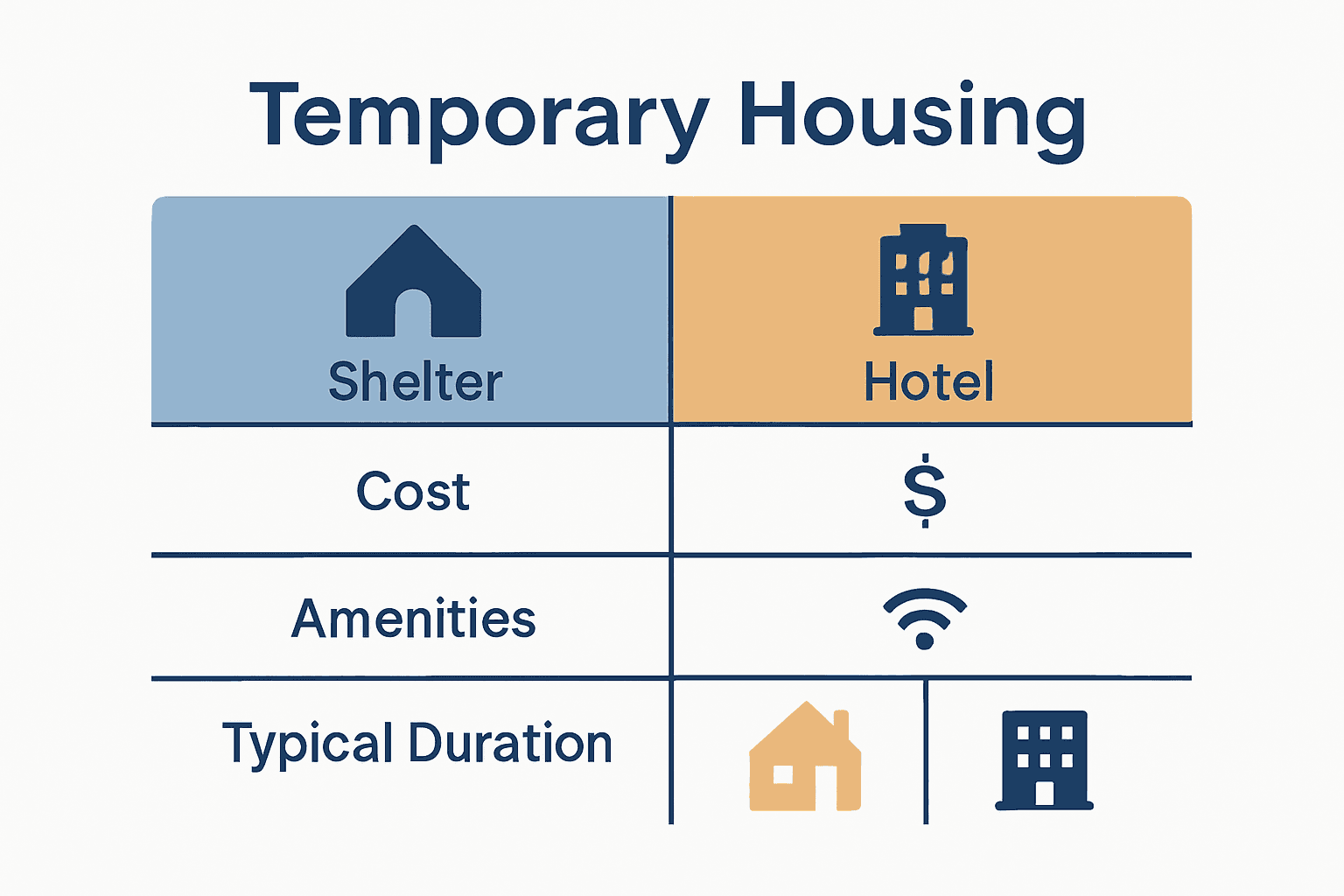
Here’s a comparison of the most common temporary housing options in the US:
| Housing Type | Key Features | Typical Duration | Average Cost |
|---|---|---|---|
| Transitional Shelter | Support services Structured setting |
Months to 2 years | Subsidized/Varies |
| Emergency Housing | Immediate crisis Basic amenities |
Days to weeks | Usually free/nonprofit |
| Extended Stay Hotel | Kitchen access Hotel amenities |
Weeks to months | ~$90/night |
| Corporate Housing | Furnished Business-oriented |
1+ month | Varies (often high) |
| Vacation Rental | Full home setup Flexible stays |
Days to months | ~$160+/night |
| Sublet | Existing lease Furnished or not |
1-12 months | 70-80% of local rent |
The key is understanding your specific needs.
 Factors like duration of stay, budget, desired amenities, and location will ultimately guide your temporary housing selection. Whether you’re a professional on a short-term work assignment, a family in transition, or someone seeking flexible living arrangements, the current housing market offers unprecedented options for temporary accommodations.
Temporary housing requires careful consideration of duration, amenities, and local regulations to ensure a comfortable and legally compliant stay. Rental periods can vary dramatically, ranging from a few days to several months, depending on individual needs and property restrictions. According to research from short-term rental experts, understanding these nuances is crucial for a smooth housing transition.
Understanding temporary storage options becomes essential when planning your temporary housing. Key amenities to consider include:
Local regulations present significant challenges for temporary housing seekers. According to Project Cubicle’s rental guide, many jurisdictions impose strict restrictions on short-term rentals. Some areas prohibit rentals under 30 days or require explicit landlord and HOA approval for subletting. Rental restrictions can vary widely, making it crucial to verify local ordinances before committing to any temporary housing arrangement.
Navigating these complex requirements demands thorough research and proactive communication. Potential renters should carefully review lease terms, confirm amenity inclusions, understand local regulations, and negotiate flexible arrangements that align with their specific temporary housing needs. The key is balancing convenience, comfort, and legal compliance to create a seamless transitional living experience.
Temporary housing in the United States is governed by a complex web of federal, state, and local regulations designed to protect both tenants and property owners. Legal frameworks play a crucial role in ensuring safety, maintaining housing standards, and protecting the rights of temporary residents across various accommodation types.
The federal government has established specific standards for different temporary housing scenarios. For instance, the Mobile Home Construction and Safety Standards Act of 1974 set comprehensive nationwide regulations for manufactured homes, demonstrating the government’s commitment to ensuring quality and safety in temporary housing options. Secure document transport becomes an essential consideration when navigating these complex legal landscapes.
Key legal considerations for temporary housing include:
Certain specialized temporary housing arrangements present unique regulatory challenges. Research highlights the complexities surrounding workforce housing, such as man camps used in resource extraction industries, which often operate in regulatory gray areas. These environments can pose significant safety risks, underscoring the importance of comprehensive legal oversight and community safeguards. Potential residents must thoroughly research local regulations, verify safety standards, and understand their legal rights before committing to any temporary housing arrangement.
Temporary housing costs can vary dramatically, making financial planning a critical aspect of your relocation strategy. Pricing structures range widely across different accommodation types, with expenses influenced by location, amenities, duration of stay, and local market conditions. Understanding these financial nuances helps travelers and relocating professionals make informed budgeting decisions.
Understanding temporary storage options can complement your financial planning by reducing additional moving expenses. According to Move.org’s temporary housing guide, typical cost ranges include:
Financial experts recommend carefully examining pricing structures beyond the base rate. Hidden fees can significantly impact overall expenses, so it’s crucial to investigate what’s included. Many temporary housing options offer flexible weekly or monthly pricing, with utilities and internet often bundled into the rate to provide more predictable total costs. Potential renters should request comprehensive pricing breakdowns, including parking fees, facility charges, and potential additional service costs.
Making a smart financial choice requires balancing budget constraints with comfort and convenience. Carefully compare total costs, consider the length of your stay, and evaluate which amenities truly matter to you. Some travelers might find significant savings by choosing slightly less convenient options, while others may prioritize location and immediate comfort despite higher expenses.
Selecting the ideal temporary housing requires a strategic approach that goes beyond basic price comparisons. Decision-making criteria involve evaluating multiple factors to ensure your temporary accommodation meets both practical and personal needs. Understanding the nuanced considerations can transform a potentially stressful housing search into a smooth, confident selection process.
Understanding temporary storage options can help complement your housing strategy, ensuring comprehensive relocation planning. According to housing experts, critical evaluation points include:
Research from housing platforms suggests conducting thorough neighborhood assessments. This involves examining crime maps, evaluating local school quality, and assessing curb appeal as indicators of a reliable temporary living environment. Potential renters should prioritize locations that offer a balance between accessibility, safety, and convenience.
Ultimately, choosing the right housing option is about matching your specific lifestyle and requirements. Consider your work schedule, personal preferences, and potential future needs. Don’t just focus on immediate conveniences; think about how the space will support your daily routines, professional commitments, and personal well-being during your temporary stay. A thoughtful, comprehensive approach ensures you select a temporary home that feels comfortable and supportive.
Finding reliable temporary housing often means facing complex rental rules, hidden costs, and the pressure of making the right decision quickly. As outlined in the “Complete Guide to Temporary Housing Options USA,” the anxiety of navigating short-term leases, figuring out moving logistics, and protecting your belongings can quickly become overwhelming during major life transitions or work relocations.
Let US Pro Logistics make your transition easier. Our team understands the challenges that come with temporary living arrangements. We offer personalized moving and secure storage solutions that give you flexibility and peace of mind. Whether you are moving statewide or across the country for a short-term assignment, our transparent pricing, secure storage options, and trusted support help you avoid financial surprises and meet your needs smoothly.

Do not risk delays or additional stress while searching for the right temporary place to stay. Get your custom quote today at US Pro Logistics and see why families, professionals, and first responders trust us for their moves and storage needs. Make your next transition smoother than ever by letting our experts handle the details. Contact us now to secure and simplify your temporary housing move.
Temporary housing options include transitional shelters, emergency housing, corporate housing, extended stay hotels, furnished short-term apartments, vacation rentals, and sublets, each catering to various needs and circumstances.
The duration of stay in temporary housing can vary widely. Transitional shelters may support residents for several months up to two years, while emergency housing generally lasts from days to weeks, and other options like extended stay hotels may accommodate guests for weeks to months.
When choosing temporary housing, consider factors such as lease flexibility, essential amenities (e.g., Wi-Fi, kitchen facilities), location quality (proximity to work or public transport), security features, and how the cost aligns with your budget.
Yes, temporary housing is governed by federal, state, and local regulations that include occupancy limits, safety standards, and landlord-tenant laws. It’s important to research local ordinances related to short-term rentals, as they can vary significantly by location.
USDOT 3664256 This number is required for any company that operates commercial vehicles in interstate commerce (across state lines). It helps identify and track the safety performance and compliance of transportation companies.
MC 1268070 This number is specifically for companies involved in the transportation of goods or passengers for hire across state lines. It’s necessary for carriers operating in the moving industry and ensures they are authorized to operate as interstate carriers.

