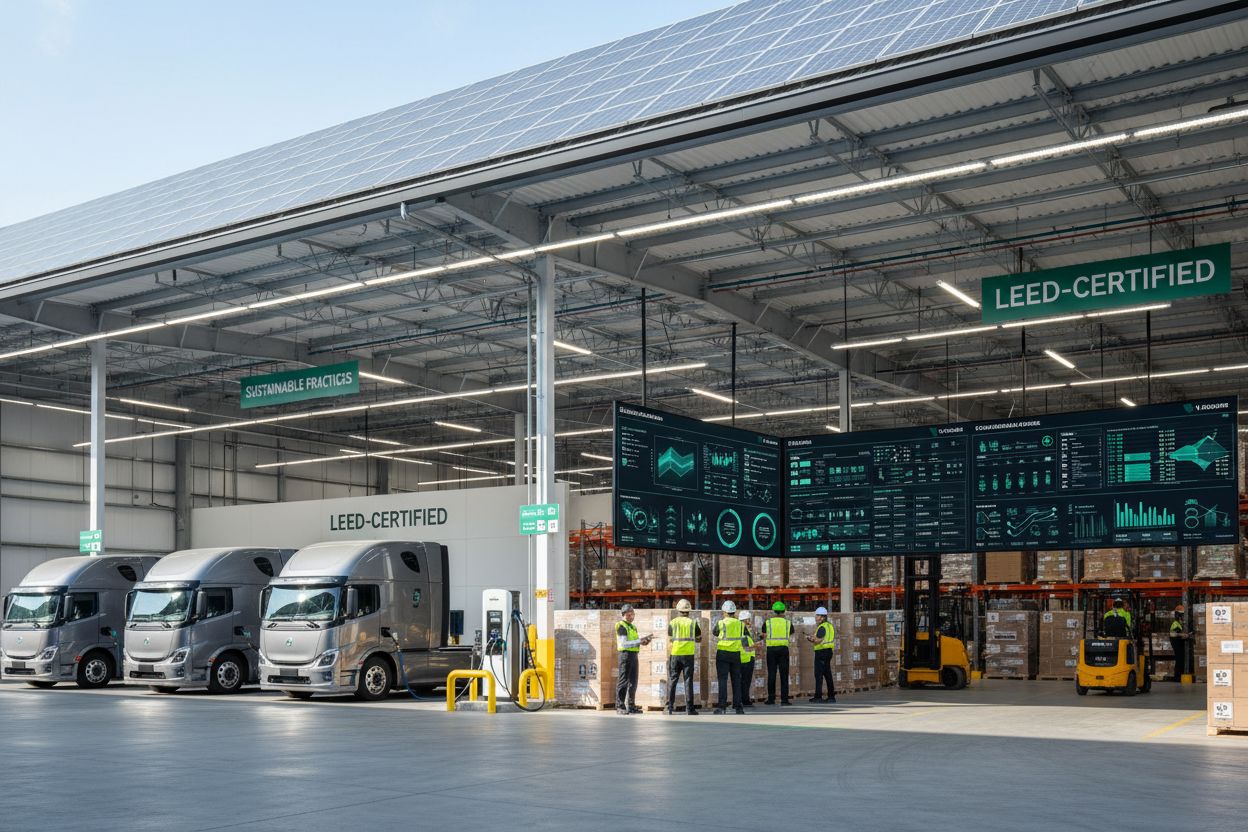
Over 90 percent of a company’s environmental impact can come from its supply chain, according to recent industry studies. For businesses aiming to stand out and protect the planet, managing operations sustainably has become a top priority. Green supply chain practices offer a path that reduces waste, saves energy, and builds trust with customers who care about a cleaner future.
| Point | Details |
|---|---|
| Green Supply Chain Practices | Focus on sustainable resource management and environmental responsibility while maintaining operational efficiency. |
| Key Strategies | Implement facility infrastructure upgrades, optimize transportation methods, and adhere to circular economy principles. |
| Compliance and Standards | Pursue recognized certifications like ISO 14001 and LEED to validate environmental efforts and enhance credibility. |
| Benefits vs Challenges | Achieve long-term cost savings and improved brand reputation, while navigating initial investment and technological complexities. |
Green supply chain practices represent a transformative approach to logistics and business operations that prioritize environmental sustainability and responsible resource management. According to Supply Chain Brain, these practices encompass multiple strategic dimensions designed to reduce ecological impact while maintaining operational efficiency.
At its core, green supply chain management involves comprehensive strategies that extend far beyond traditional business models. These strategies include vetting sustainable infrastructure like LEED-certified warehouses, optimizing transportation through intelligent routing and sustainable fuel adoption, and implementing circular economy principles that emphasize recycling and product refurbishment. The goal is creating an integrated system where environmental considerations are as critical as economic performance.
Key elements of green supply chain practices typically involve:
By embracing these practices, organizations can simultaneously achieve environmental stewardship and competitive advantages. Companies that successfully integrate green supply chain strategies often experience improved operational efficiency, enhanced brand reputation, and reduced long-term operational costs. The future of sustainable business lies not just in compliance, but in viewing environmental responsibility as a core strategic imperative.
Greener logistics demands a comprehensive approach that transforms traditional supply chain operations into sustainable, environmentally responsible systems. According to Supply Chain Brain, organizations can drive significant environmental improvements through strategic, multifaceted interventions across their logistics networks.
Facility Infrastructure represents the first critical frontier in sustainable logistics. This involves selecting and retrofitting warehouses and distribution centers with energy-efficient systems, prioritizing LEED-certified facilities that minimize environmental footprints. By investing in green building technologies, companies can dramatically reduce energy consumption and operational carbon emissions.
Transportation Optimization emerges as another key strategy for greener logistics. This includes:
The final pillar involves embracing circular economy principles and robust ESG tracking. By designing closed-loop supply systems that prioritize recycling, refurbishment, and transparent environmental reporting, organizations can transform logistics from a linear consumption model to a regenerative, sustainable ecosystem. Understanding the Role of Technology in Logistics can further illuminate how innovative technologies support these transformative strategies, enabling businesses to achieve both environmental stewardship and operational excellence.
Green supply chain practices have evolved from theoretical concepts to tangible strategies implemented by leading global corporations. According to The Supply Chain Link, companies across diverse industries are demonstrating innovative approaches to sustainability that go far beyond traditional environmental compliance.
Logistics and Transportation Leaders are pioneering significant transformations. As highlighted by research from Preprints, companies like DHL are integrating electric vehicles into their fleets, while UPS has developed sophisticated carbon-neutral delivery systems and fleet optimization strategies. Maersk, a global shipping giant, is investing in biofuels and zero-carbon vessels to dramatically reduce maritime transportation emissions.
Corporate Sustainability Champions showcase diverse green supply chain strategies:
Companies like Patagonia, Nike, and IKEA are setting remarkable benchmarks. IKEA, for instance, has committed to 100% zero-emission home deliveries by 2025, while Patagonia has built its entire brand around circular design and environmental responsibility.
VIDEO:video_content] [Understanding the Role of Technology in Logistics can provide additional insights into how technological innovation supports these transformative sustainability strategies.
Here’s a summary of leading companies and their green supply chain initiatives:
| Company | Industry | Key Green Initiatives |
|---|---|---|
| DHL | Logistics | Electric vehicle fleets Route optimization |
| UPS | Logistics | Carbon-neutral delivery Fleet electrification |
| Maersk | Shipping | Biofuels adoption Zero-carbon vessels |
| IKEA | Retail | Zero-emission deliveries Renewable energy sourcing |
| Patagonia | Apparel | Circular design Recycling and refurbishment |
| Nike | Apparel | Sustainable materials Closed-loop production |
Navigating the complex landscape of green supply chain standards requires a strategic approach to environmental and social responsibility. According to The Supply Chain Link, organizations must proactively pursue recognized certifications that demonstrate their commitment to sustainable practices.
International Standards play a crucial role in establishing credibility and systematic environmental management. Key certifications include:
Facility Certifications represent another critical dimension of green supply chain compliance. As highlighted by Supply Chain Brain, organizations can leverage green building certifications like LEED (Leadership in Energy and Environmental Design) and BREEAM to demonstrate infrastructure sustainability. These certifications not only validate environmental commitments but also often qualify businesses for government incentives such as tax breaks, grants, and rebates.
Implementing these standards is more than a box-checking exercise—it’s about creating a comprehensive framework for sustainable operations.
IMAGE:descriptive_key_1] [Understanding the Role of Technology in Logistics can provide additional context on how technological innovations support these certification processes, helping businesses transform compliance into a strategic advantage.
Green supply chain initiatives represent a complex balance between environmental responsibility and economic feasibility. According to research from Preprints, companies are increasingly recognizing that sustainability can be both an ethical imperative and a strategic business opportunity.
Financial Benefits of green supply chain practices extend far beyond traditional environmental considerations. Organizations can experience significant advantages such as:
Key Challenges in implementing green supply chain strategies include substantial upfront investments, technological complexity, and the need for comprehensive organizational transformation. Companies like DHL and UPS demonstrate that strategic electrification and route optimization can mitigate initial implementation costs, transforming potential financial barriers into long-term competitive advantages. The critical consideration is not whether green initiatives are expensive, but how they can be strategically integrated to generate measurable economic and environmental returns.
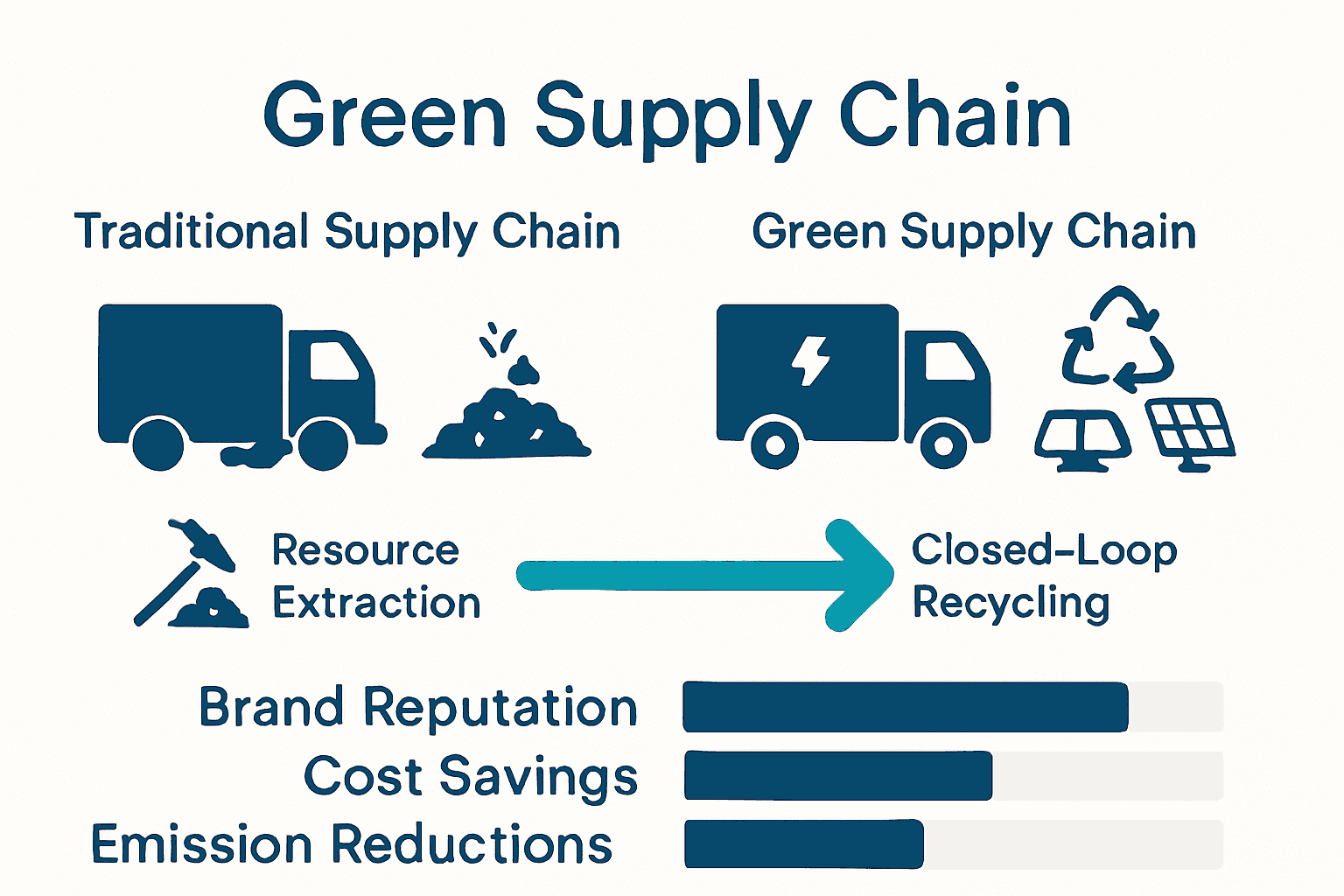
Navigating these complexities requires a holistic approach. Understanding the Role of Technology in Logistics can provide deeper insights into how technological innovations can help businesses overcome implementation challenges and maximize the potential of sustainable supply chain practices.
Embracing green supply chain practices means tackling challenges like reducing carbon emissions and adopting sustainable transportation methods. If you are committed to environmental responsibility while ensuring your operations remain smooth and efficient, partnering with a trusted logistics provider is essential. US Pro Logistics specializes in tailored moving and freight solutions across California and the United States, offering expertise that aligns with eco-conscious goals such as route optimization and secure, efficient deliveries.
Take the step toward a greener logistics future today. Discover how our comprehensive services can support your sustainable business objectives with transparent pricing and dedicated customer care. Visit US Pro Logistics to learn more and get a personalized quote. Experience the benefits of a family-owned partner ready to help you minimize environmental impact without compromising reliability.
Green supply chain practices are strategies aimed at reducing environmental impact while maintaining operational efficiency. They include elements such as reducing carbon emissions, prioritizing renewable materials, and implementing closed-loop supply systems.
Companies can optimize transportation by using advanced routing algorithms, transitioning to sustainable fuels, utilizing hybrid and electric vehicles, and consolidating freight to minimize overall transportation volume.
Key certifications include ISO 14001 for environmental management, ISO 50001 for energy management, Fair Trade Certification for social sustainability, and B Corp Certification for overall social and environmental performance.
The financial benefits include reduced operational costs through energy efficiency, enhanced brand reputation, potential tax incentives, improved risk management, and long-term cost savings from optimized resource utilization.
USDOT 3664256 This number is required for any company that operates commercial vehicles in interstate commerce (across state lines). It helps identify and track the safety performance and compliance of transportation companies.
MC 1268070 This number is specifically for companies involved in the transportation of goods or passengers for hire across state lines. It’s necessary for carriers operating in the moving industry and ensures they are authorized to operate as interstate carriers.

