
Shipping costs can seem straightforward, yet the hidden complexity behind freight rates surprises most people. There are 18 official freight classes according to the National Motor Freight Traffic Association and each one can send your shipping bill soaring or shrinking. Most assume weight is the main thing that matters but it turns out density, stowability, and even the risk of damage play just as big a role and a smart calculator can make or break your business’s bottom line.
| Takeaway | Explanation |
|---|---|
| Freight class affects shipping costs | Understanding freight class is crucial, as it determines how shipping rates are calculated based on shipment characteristics. |
| Freight class calculators simplify logistics | These tools evaluate factors like weight and density, ensuring precise shipping classifications and pricing models. |
| Lower freight classes save costs | Items classified with lower numbers are denser and easier to transport, leading to lower shipping rates. |
| Transparency in pricing is essential | Using freight class calculators promotes fair, consistent shipping rates and reduces disputes over pricing. |
| Density impacts transportation complexity | A shipment’s density significantly affects its classification, directly influencing required resources and handling methods. |
Freight class calculators represent sophisticated tools essential for shipping professionals and businesses engaged in transporting goods across various transportation networks. These specialized calculators help determine the National Motor Freight Classification (NMFC) for different types of shipments by systematically evaluating critical characteristics such as product density, handling requirements, stowability, and potential liability.
Shippers rely on freight class calculators to transform complex logistical variables into standardized pricing frameworks. Freight delivery services depend on precise classification because shipping rates directly correlate with a shipment’s specific freight class. The calculator considers multiple dimensions including:
The National Motor Freight Traffic Association establishes 18 distinct freight classes ranging from 50 to 500. Lower numbers indicate more compact, denser, and easier-to-transport items, while higher numbers represent more challenging freight that requires special handling.
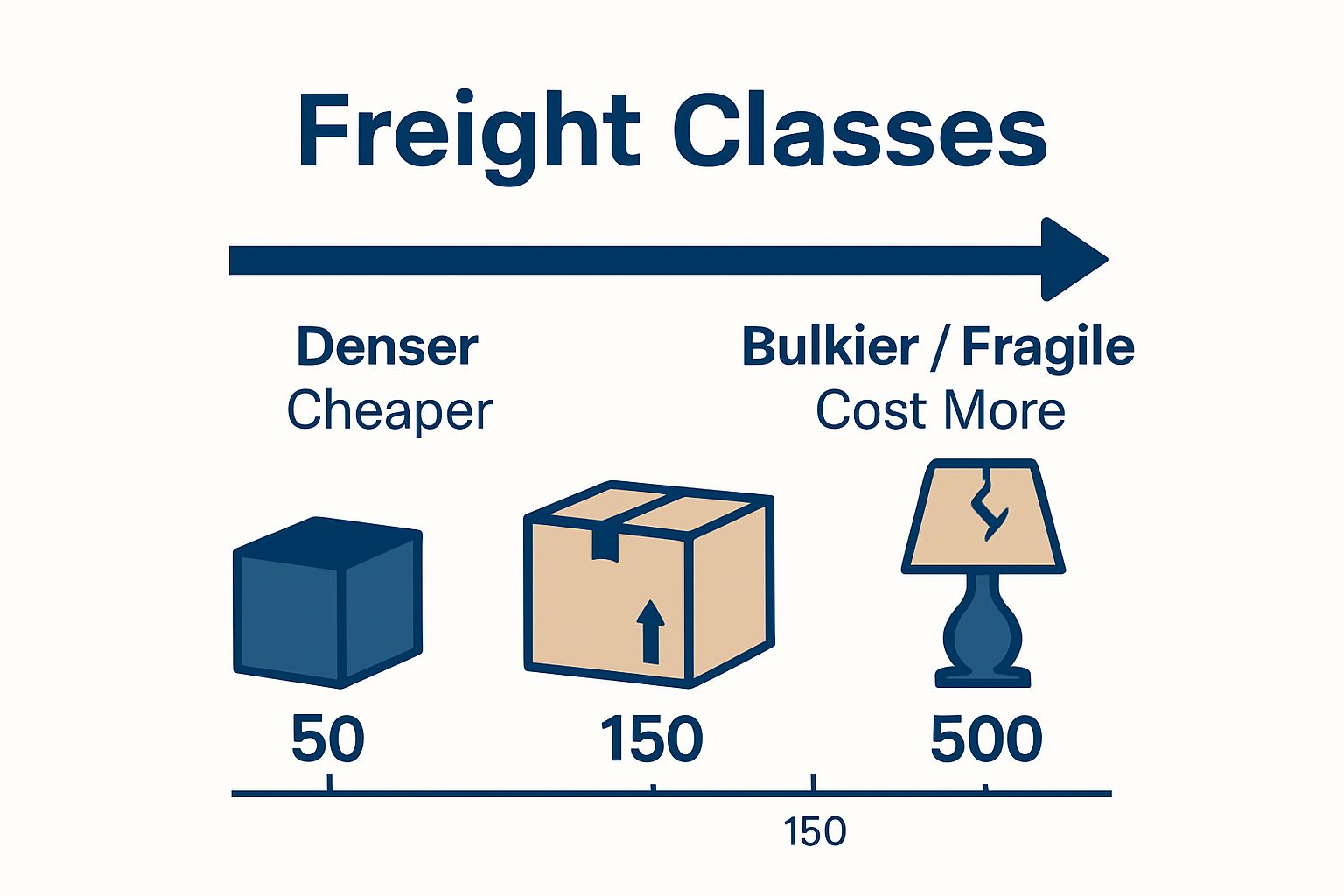
Freight class calculators serve as critical instruments for transparent pricing and efficient transportation management. According to the U.S. Department of Transportation, these tools help carriers and shippers establish fair, consistent rates based on objective measurements. By providing a standardized method of evaluation, freight class calculators reduce ambiguity and potential disputes in shipping cost calculations.
Companies leveraging these calculators can more accurately predict shipping expenses, optimize cargo loading, and make informed decisions about packaging and transportation strategies.
The precision offered by freight class calculators transforms complex logistical challenges into manageable, predictable processes that benefit both shipping providers and their clients.
Freight class plays a pivotal role in determining shipping expenses, serving as a fundamental mechanism for establishing transportation pricing across complex logistics networks. Unlike simplistic weight-based calculations, freight class provides a comprehensive assessment that considers multiple dimensions of shipment characteristics and transportation complexity.
The economic significance of freight class extends far beyond basic pricing. Freight delivery services utilize this classification system to develop nuanced pricing models that reflect the true complexity of transporting different types of goods. Shipping costs are not just about weight, but about several critical factors:
Companies that understand these intricate relationships can strategically manage their shipping expenses by optimizing packaging, consolidating shipments, and selecting appropriate transportation methods.
According to American Transportation Research Institute, freight classification represents a sophisticated approach to quantifying the true cost of transportation. The system recognizes that transporting a dense, compact item requires fundamentally different resources compared to handling a large, fragile, or irregularly shaped product.
A shipment of steel pipes, for instance, might have a dramatically different freight class compared to a similar weight of electronic equipment or delicate glassware. This nuanced approach ensures that shipping rates reflect the actual challenges and resources required for safe, efficient transportation.
Ultimately, freight class provides a standardized language for logistics professionals, enabling transparent, fair pricing that accounts for the genuine complexity of moving goods across various transportation networks. By creating a systematic method of evaluation, the freight class system helps businesses make more informed shipping decisions and manage transportation expenses more effectively.

Freight class calculators operate as sophisticated technological tools that transform complex shipping variables into standardized, actionable logistics information. These advanced systems integrate multiple computational algorithms to assess and categorize shipments with remarkable precision, enabling transportation professionals to make data-driven decisions.
The operational mechanics of freight class calculators involve evaluating several critical dimensional factors. Our packing expertise highlights the importance of understanding these intricate measurement processes. The core computational parameters typically include:
Each parameter is assigned a specific mathematical weight, allowing the calculator to generate a comprehensive classification that reflects the shipment’s unique transportation characteristics. The precision of these calculations ensures that shipping rates accurately represent the true logistical challenges associated with moving specific types of goods.
According to Logistics Management Institute, the algorithmic process involves converting physical characteristics into numerical representations. A shipment’s volume, weight, and potential handling requirements are transformed into standardized metrics that align with the National Motor Freight Classification (NMFC) framework.
For instance, a calculator might analyze a shipment’s cubic density by dividing its total volume by its weight, then cross-referencing this information with established transportation industry standards. This approach allows for a nuanced understanding of how different items should be classified, priced, and transported.
Ultimately, freight class calculators serve as critical bridges between physical logistics and financial planning, providing shipping professionals with a robust tool for understanding the true economic implications of transporting various types of goods across complex transportation networks.
Freight classification represents a sophisticated system that transforms complex shipping characteristics into standardized, measurable metrics. This intricate framework enables logistics professionals to evaluate shipments through multiple dimensional perspectives, ensuring accurate pricing and efficient transportation strategies.
Our packing solutions guide emphasizes the importance of understanding the nuanced factors that influence freight classification. The fundamental dimensions that determine a shipment’s classification include:
Each dimension contributes to a comprehensive assessment that goes beyond simple weight measurements, providing a holistic view of a shipment’s transportation complexity.
The table below summarizes the key dimensions used in freight classification and explains how each impacts shipping costs and logistics decisions.
| Classification Dimension | Description | Impact on Shipping |
|---|---|---|
| Density | Measures weight per cubic foot of shipment | Higher density often leads to lower freight class and lower rates |
| Stowability | Assess how easily the freight can be loaded and fit with other loads | Difficult-to-stow items may be assigned a higher class, increasing costs |
| Handling | Considers special requirements for lifting, moving, or managing freight | More complex handling increases class and cost |
| Liability | Evaluates risk of theft, damage, or perishability | Higher risk items get a higher class for added protection |
| Value | Reflects the shipment’s worth and fragility | Higher value/fragile items may need special handling or insurance |
According to Federal Highway Administration, density emerges as a pivotal factor in freight classification. Density represents the relationship between a shipment’s weight and the space it occupies, directly influencing transportation efficiency and cost. A lower density typically indicates a higher freight class, reflecting the increased challenges associated with transporting less compact items.
For example, a shipment of lightweight, bulky furniture would have a different classification compared to a dense, compact metal component of similar weight. This nuanced approach ensures that shipping rates accurately reflect the actual resources and challenges involved in transporting different types of goods.
Ultimately, freight classification provides a standardized language for logistics professionals, transforming complex shipping variables into clear, actionable information that supports more efficient and transparent transportation decision making.
Struggling to make sense of freight class calculators and how they affect your shipping expenses? When pricing relies on complex classification systems like NMFC, it’s easy to feel uncertain about what truly impacts your bottom line. Whether you are managing a residential move, a business relocation, or specialized freight, hidden costs from misclassified shipments can quickly add up. Accurate freight class assessment is key to avoiding surprise charges and ensuring a seamless experience across California and the United States.

Choosing US Pro Logistics means working with experts who understand density, handling requirements, and stowability. We apply these professional insights to protect your move and your budget. Discover how our transparent freight delivery services and proven packing expertise set your shipment up for success. Request your personalized quote today at the main US Pro Logistics website and experience stress-free shipping and moving support from a team that treats your cargo as their own.
A freight class calculator is a tool that helps determine the National Motor Freight Classification (NMFC) for shipments. To use it, input key information about your shipment, such as weight, dimensions, and handling requirements, to receive an accurate freight class and associated pricing.
Accurate freight classification directly impacts shipping costs, as rates are determined based on the shipment’s class. To ensure fair pricing, assess your product’s density and handling needs to establish the correct freight class before shipping.
Using a freight class calculator can help identify the best shipping methods and packaging strategies to minimize costs. Evaluate different packaging options and shipment sizes to optimize your freight class, potentially reducing costs by around 15-20%.
When using a freight class calculator, consider factors like product density, handling challenges, and liability risks. Gather accurate measurements and data about your shipment to ensure the most precise classification and pricing results.
It’s advisable to check your freight class for each shipment, especially if you’re shipping different products frequently. Make it a practice to review the calculator findings each time you ship to avoid unexpected charges or disputes.
Yes, a freight class calculator streamlines logistics by providing standardized classifications that lead to more predictable shipping costs and efficient planning. Use the calculator regularly to inform your transportation strategies and enhance your overall logistics management.
USDOT 3664256 This number is required for any company that operates commercial vehicles in interstate commerce (across state lines). It helps identify and track the safety performance and compliance of transportation companies.
MC 1268070 This number is specifically for companies involved in the transportation of goods or passengers for hire across state lines. It’s necessary for carriers operating in the moving industry and ensures they are authorized to operate as interstate carriers.

