
Shipping goods always carries a risk. Every year, companies file over 1 million freight claims in the United States alone due to cargo damage or loss. Most people think these claims revolve around endless paperwork and blame games. The real secret is that the freight claims process actually protects everyone in the supply chain and creates trust where uncertainty once ruled.
| Takeaway | Explanation |
|---|---|
| Documentation is essential for claims success | Accurate records of shipment condition and contents are critical in proving damage or loss in freight claims. |
| Timely reporting is crucial | Claims must be filed within specific timeframes after damage or loss is discovered to be considered valid. |
| Clear evidence supports your claim | Detailed photographic and written documentation is necessary to demonstrate the extent of damage and facilitate resolution. |
| Understand carrier liability | Shippers should be aware of the legal obligations and conditions surrounding carrier liability for damages during transportation. |
| Proactive strategies improve outcomes | Implementing immediate damage reporting and thorough documentation practices significantly increases the chances of successful claims resolution. |
The freight claims process is a critical mechanism in transportation and logistics that allows shippers and carriers to resolve issues when cargo is damaged, lost, or arrives in an unsatisfactory condition during transit. Freight delivery services rely on this process to maintain accountability and protect the financial interests of all parties involved.
At its core, the freight claims process serves as a legal and financial protection framework for businesses and individuals shipping goods. When items are transported across regions or states, numerous risks can compromise their integrity. These risks might include physical damage, total loss, partial damage, or delivery delays that can result in significant economic consequences.
The freight claims process typically involves several critical elements that ensure fair resolution and compensation:
According to Transportation Research Board, successful freight claims depend on precise documentation and understanding of carrier liability regulations. Shippers must meticulously track and report potential issues to successfully navigate the complex claims landscape.
Ultimately, the freight claims process provides a structured approach for resolving transportation-related disputes, ensuring that businesses and individuals can recover financial losses and maintain trust in shipping networks. By establishing clear guidelines and expectations, this process helps minimize economic risks associated with goods transportation.
The following table summarizes the main components and requirements involved in the freight claims process to provide a clear overview for shippers and carriers.
| Component | Description |
|---|---|
| Documentation Requirements | Detailed records of shipment condition, packaging, and contents |
| Timely Reporting | Claims must be filed within specific timeframes after discovering damage or loss |
| Evidence Gathering | Photographic and written documentation proving the extent of damage |
| Carrier Liability Awareness | Understanding carrier’s legal responsibility for cargo during transit |
| Communication Protocols | Clear, prompt interactions between shipper and carrier throughout the process |
| Inventory Verification | Comparing pre-shipment and post-delivery records for discrepancies |
Freight claims involve complex legal and financial responsibilities that define how transportation providers and shippers manage potential losses during cargo transit. Freight delivery services must navigate these intricate frameworks to protect both parties’ interests.
Carrier liability represents the legal obligation of transportation providers to compensate shippers for damaged, lost, or delayed goods. This concept is rooted in establishing clear accountability mechanisms that ensure fair treatment and financial protection. According to the Carmack Amendment, carriers are generally responsible for cargo from pickup to delivery, with specific conditions defining their level of financial exposure.
Several key factors determine the extent of carrier liability in freight claims:
The legal landscape of freight claims requires precise understanding of carrier responsibilities. Carriers must maintain comprehensive documentation and adhere to strict reporting protocols. Shippers, conversely, must provide detailed evidence of damages and file claims within specified timeframes.
Ultimately, successful freight claims resolution depends on clear communication, meticulous documentation, and a mutual understanding of legal and financial obligations between transportation providers and cargo owners.
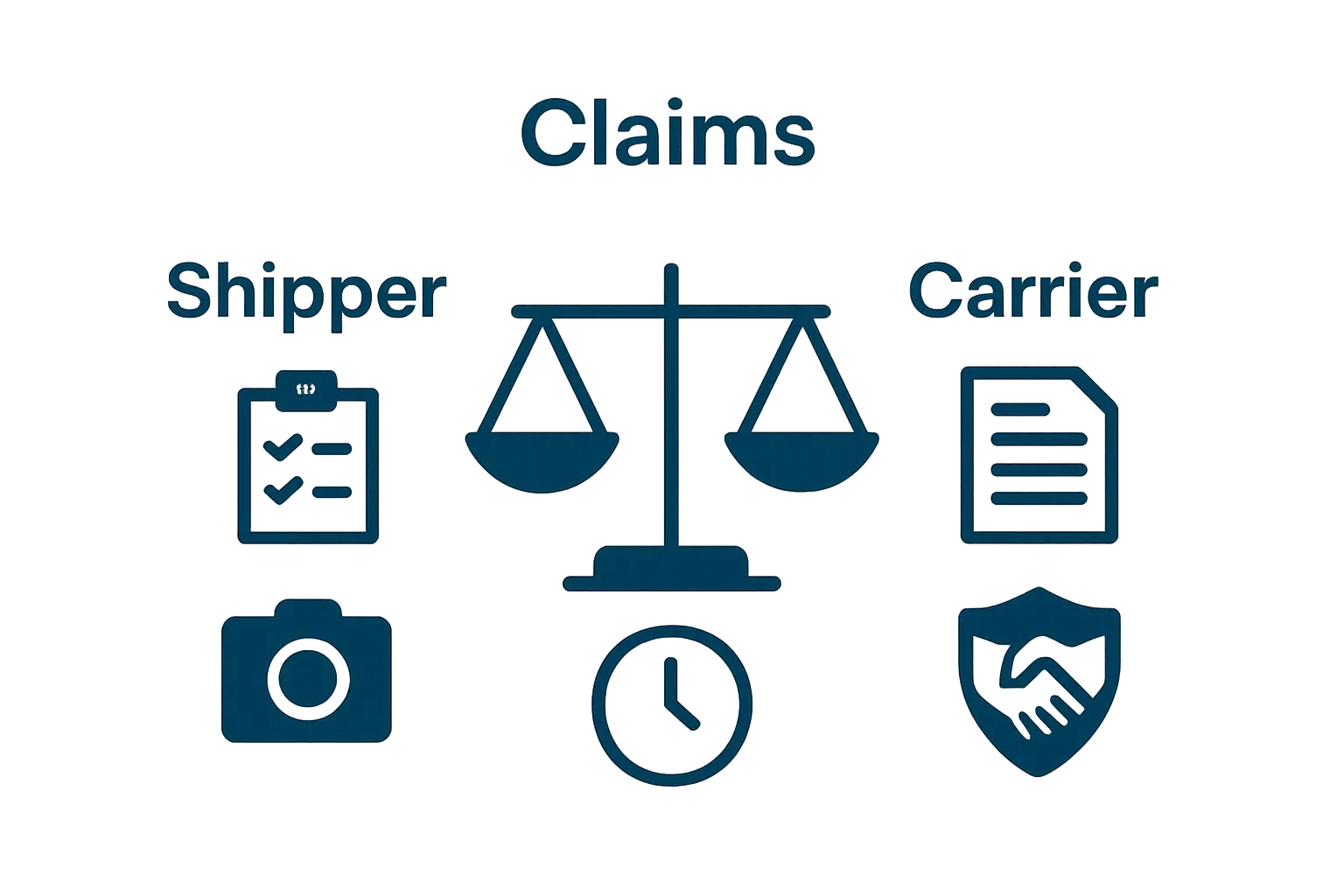
The freight claims process represents a systematic approach to addressing transportation-related cargo issues, providing a structured pathway for resolving disputes between shippers and carriers. Freight delivery services depend on this methodical framework to ensure fair and transparent resolution of potential transportation challenges.
Successful freight claims begin with comprehensive documentation and prompt action. Shippers must meticulously gather evidence demonstrating the extent and nature of cargo damage or loss. According to the National Cargo Transportation Association, effective claim preparation involves several critical steps:
Once documentation is assembled, shippers submit formal claims to the carrier, initiating a structured review process.
Carriers typically have specific protocols for evaluating claims, which include assessing the submitted evidence, investigating the circumstances of potential damage, and determining potential liability.
The resolution timeline can vary depending on the complexity of the claim, with carriers generally required to acknowledge receipt and provide an initial response within a specified period. This phase demands clear communication and a systematic approach to validating the presented evidence and understanding the specific circumstances surrounding the potential cargo loss or damage.
Ultimately, the freight claims process serves as a critical mechanism for maintaining accountability in transportation logistics, ensuring that both shippers and carriers have a clear, structured pathway for addressing and resolving potential disputes.
Freight claims represent complex interactions where theoretical guidelines meet practical challenges, requiring sophisticated strategies for effective resolution. Freight delivery services must navigate intricate scenarios that test standard protocols and demand nuanced approaches.
Transportation logistics frequently encounter situations that complicate standard claims processes. According to the Transportation Research Board, most freight claim challenges stem from multifaceted issues involving documentation, damage assessment, and liability determination.
Freight claim scenarios often involve several critical challenges that can significantly impact resolution:
Professional freight claim management requires a strategic approach that balances legal requirements, documentary precision, and practical problem-solving. Carriers and shippers must develop robust communication protocols that facilitate transparent and efficient claim resolution.
Successful navigation of freight claims demands comprehensive understanding of potential complications, proactive documentation strategies, and a commitment to collaborative problem resolution. By anticipating potential challenges and maintaining meticulous records, transportation professionals can mitigate risks and streamline the claims process.
This table outlines typical freight claim challenges encountered during the process and provides associated solutions for each, assisting transportation professionals in overcoming common obstacles.
| Challenge | Solution |
|---|---|
| Packaging Integrity Disputes | Maintain clear standards and document packaging at shipment |
| Tight Documentation Windows | Prepare documentation proactively and submit claims promptly |
| Complex Damage Assessment | Use detailed photos and written descriptions for evidence |
| Differentiating Damage Timing | Verify cargo condition at delivery and compare to pre-ship |
| Communication Gaps | Establish consistent communication protocols with carriers |
| Proving Liability | Gather and present comprehensive supporting documentation |
Effective freight claims management requires a strategic approach that combines proactive preparation, meticulous documentation, and comprehensive understanding of carrier protocols. Freight delivery services recognize that successful claims resolution depends on more than just filing paperwork.
Documentation represents the cornerstone of successful freight claims. According to the American Trucking Associations, comprehensive evidence collection can dramatically improve claim resolution outcomes. Professional shippers must develop systematic approaches to capturing and preserving critical transportation documentation.
Successful freight claim navigation involves several critical best practices:
The freight claims process demands a proactive and methodical approach. Shippers must understand that successful claims depend not just on identifying damage, but on presenting clear, compelling evidence that demonstrates the extent and origin of cargo issues.
Ultimately, mastering the freight claims process requires a combination of preparation, attention to detail, and strategic communication. By developing robust documentation protocols and maintaining transparent relationships with carriers, shippers can significantly improve their ability to resolve transportation-related challenges efficiently and effectively.

If you are stressed about possible freight damage, lost items, or the lengthy claims process during your move, you are not alone. Our article highlights how overwhelming documentation and dispute resolution can become for individuals and businesses alike. Navigating carrier liability, urgent claims deadlines, and the need for airtight records can leave you anxious about protecting both your possessions and peace of mind.
Choose a moving company that stands behind you at every stage. At US Pro Logistics, we combine expert freight delivery services with comprehensive claims assistance for residential and commercial moving. Our team documents and manages each step of your transition to remove confusion and reduce your risk during the claims process. Act now to protect your belongings and enjoy transparent, worry-free logistics. Contact us through our homepage to get connected with a moving expert who truly cares about your success.
The freight claims process is a structured method that allows shippers and carriers to resolve issues related to damaged, lost, or unsatisfactory cargo during transit, ensuring accountability and financial protection for all parties involved.
Documentation is crucial because it serves as the foundation for proving the condition of the shipment, the extent of damage, and the circumstances surrounding any potential losses. Detailed documentation can significantly influence the resolution outcome of a claim.
Carriers have a legal obligation to compensate shippers for damaged or lost goods. They must also demonstrate that they were not negligent or that damage resulted from uncontrollable circumstances, such as natural disasters.
Shippers can improve their chances by promptly documenting damages, providing comprehensive visual evidence, accurately declaring cargo value, and filing claims within specific timeframes. Maintaining clear communication with carriers is also essential.
USDOT 3664256 This number is required for any company that operates commercial vehicles in interstate commerce (across state lines). It helps identify and track the safety performance and compliance of transportation companies.
MC 1268070 This number is specifically for companies involved in the transportation of goods or passengers for hire across state lines. It’s necessary for carriers operating in the moving industry and ensures they are authorized to operate as interstate carriers.

