
Freight classification sounds like an inside term for shipping pros, but it influences the price tag on nearly every product that moves across the country. Get this. There are 18 official freight classes, ranging from 50 to 500, and a simple packaging tweak can bump your shipping costs up or down by hundreds of dollars per load. The surprising part? Most businesses miss out on big savings just because they do not fully understand how these classes really work.
| Takeaway | Explanation |
|---|---|
| Understanding freight classification is essential | Freight classification helps businesses categorize goods, impacting shipping efficiency and costs. |
| Accurate classification prevents costly errors | Incorrect freight classification can lead to unexpected fees and shipment delays, affecting budgets and timelines. |
| Lower freight classes reduce shipping costs | Items classified in lower freight classes typically incur lower shipping rates, benefiting cost management. |
| Complexity influences logistics strategies | Higher freight classes require specialized handling and equipment, impacting service levels and operational planning. |
| Risk assessment is tied to freight class | Higher classes imply greater liability and potential damage, necessitating comprehensive insurance strategies for protection. |
Freight classification represents a standardized system for categorizing shipped goods based on multiple characteristics that determine transportation costs and handling requirements. This complex framework serves as the backbone of efficient logistics and transportation management across industries.
The freight classification guide provides a systematic approach to categorizing different types of cargo according to specific attributes. The National Motor Freight Traffic Association (NMFTA) establishes these standards, which consider several critical factors in determining a shipment’s classification:
These parameters help transportation companies and shippers establish accurate pricing and ensure appropriate handling protocols for various types of freight.
The table below summarizes the key factors considered in freight classification, helping clarify how each characteristic contributes to determining the appropriate freight class.
| Factor | Description | Impact on Classification |
|---|---|---|
| Density | Weight of the shipment divided by its cubic feet | Lower density equals higher class |
| Stowability | Ease with which the item can be stored with others | Poor stowability raises classification |
| Handling | Degree of care or special consideration required for moving the item | Complicated handling increases class |
| Liability | Risk of damage, value, perishability, or special care needs | Higher liability means higher class |
Precise freight classification directly influences shipping costs and logistical efficiency. By creating a standardized system, businesses can predict transportation expenses more accurately and optimize their supply chain strategies. Incorrect classification can lead to significant financial implications, including unexpected surcharges, delayed shipments, and potential regulatory penalties.
For manufacturers, distributors, and logistics professionals, understanding the nuanced details of freight classification is not just a technical requirement but a critical business strategy. The classification system ensures fair pricing, enables accurate budgeting, and promotes transparent communication between shippers and carriers.
Each freight class represents a specific range within a standardized numeric scale, typically from 50 to 500, with lower numbers indicating more dense and easier-to-transport items, while higher numbers suggest more complex, fragile, or challenging cargo that requires specialized handling and increased transportation costs.
Freight classification is a sophisticated system that requires understanding various critical components that determine how goods are transported, priced, and managed throughout the shipping process. Each class represents a unique combination of characteristics that impact transportation logistics and costs.
The National Motor Freight Classification (NMFC) defines 18 distinct freight classes, ranging from Class 50 to Class 500. The Transportation Institute highlights these classes are not arbitrary but meticulously calculated based on specific characteristics:
The numeric scale provides a standardized method for carriers and shippers to communicate about cargo characteristics, with lower numbers indicating more straightforward transportation requirements and higher numbers suggesting more intricate handling needs.
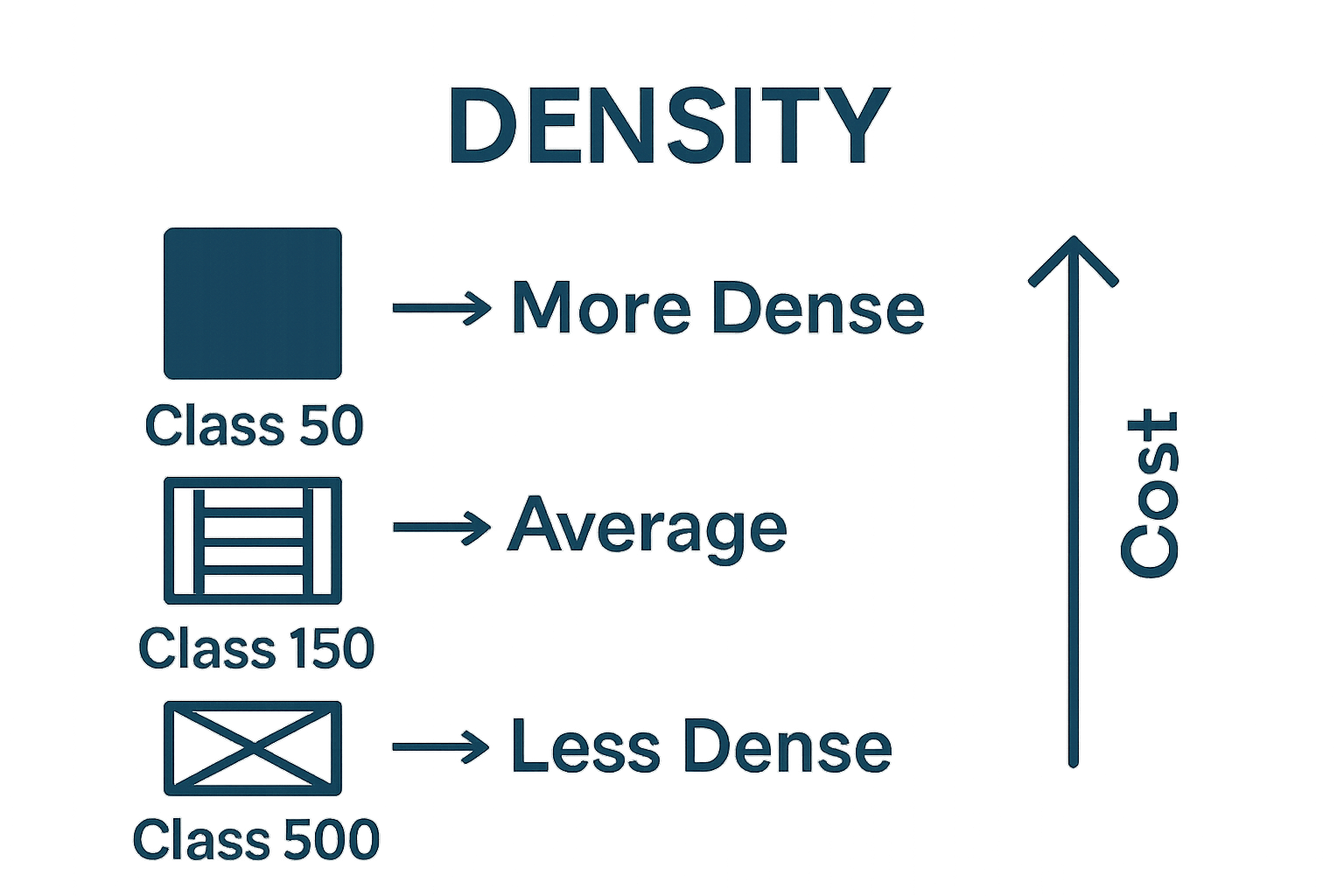
Density serves as a fundamental factor in determining freight class. This measurement represents the relationship between an item’s weight and the space it occupies during transportation. Shipping professionals calculate density by dividing the total weight of a shipment by its total cubic feet.
A lower density typically correlates with a higher freight class, which means more expensive shipping rates. For instance, a large but lightweight item like furniture padding will have a different classification compared to a compact, heavy metal component.
Beyond density, freight classification considers multiple nuanced factors that influence transportation complexity:
These multifaceted considerations ensure that transportation costs accurately reflect the true complexity of moving different types of cargo, providing a fair and transparent pricing mechanism for both carriers and shippers.
Freight classification is a critical mechanism that directly influences shipping expenses, service levels, and overall logistics strategies. This sophisticated system transforms seemingly complex transportation variables into a standardized framework that impacts pricing, handling, and risk management across industries.
The relationship between freight classification and shipping costs is intricate and multifaceted. According to the American Logistics Association, different freight classes create significant variations in transportation pricing. A shipment’s classification determines not just its base rate, but also potential surcharges, handling fees, and insurance requirements.
Companies must strategically navigate these classifications to manage transportation budgets effectively.
The following table provides a comparison of how different freight class ranges typically affect shipping costs, service requirements, and risk management, giving readers a quick reference for logistical impact.
| Freight Class Range | Typical Shipping Costs | Service Requirements | Risk and Insurance Considerations |
|---|---|---|---|
| Class 50-70 | Lowest rates | Standard equipment, simple handling | Lower risk, basic insurance sufficient |
| Class 85-150 | Moderate rates | Somewhat specialized handling | Moderate risk, adjust insurance as needed |
| Class 250-500 | Highest rates | Specialized equipment, careful handling | High risk of damage, comprehensive insurance needed |
| For instance, redesigning packaging or consolidating shipments can potentially lower a product’s freight class and reduce overall shipping expenses. |
Freight classification extends beyond pricing, directly impacting service quality and handling protocols. Different classes trigger specific logistical requirements that determine how carriers manage, store, and transport goods. More complex classifications often necessitate specialized equipment, additional personnel training, and enhanced safety protocols.
Businesses must recognize that higher freight classes not only increase costs but also introduce more rigorous transportation standards. This means longer transit times, more careful handling, and potentially more sophisticated tracking and insurance requirements.
Freight classification plays a pivotal role in risk assessment and insurance strategies. Check out our detailed guide on freight delivery services to understand how classification influences comprehensive logistics planning.
Higher freight classes inherently suggest greater vulnerability to damage, requiring more comprehensive insurance coverage. Shipping professionals must carefully evaluate each shipment’s classification to determine appropriate risk mitigation strategies, ensuring that valuable or fragile cargo receives the necessary protection throughout its transportation journey.
Freight classification transcends theoretical concepts, playing a critical role in practical logistics across diverse industries. Understanding its real-world implementation provides insights into how this complex system drives efficient transportation and supply chain management.
Research from the National Manufacturing Association demonstrates how freight classification directly impacts production and distribution strategies. Different industrial sectors utilize classification systems to optimize shipping costs and logistics planning.
Manufacturers strategically design product packaging and shipping configurations to minimize freight class complexity, potentially reducing transportation expenses and improving overall supply chain efficiency.
E-commerce platforms and retail businesses increasingly rely on sophisticated freight classification systems to manage inventory, control shipping expenses, and maintain competitive pricing. The nuanced approach allows companies to make informed decisions about product packaging, shipping methods, and logistical strategies.
By understanding detailed classification parameters, businesses can negotiate better shipping rates, optimize warehouse space, and develop more efficient transportation networks. Learn more about our packing strategies that can help minimize shipping complexities.
Certain industries require exceptionally meticulous freight classification due to the unique characteristics of their cargo. Specialized sectors such as aerospace, medical equipment, and high-technology industries depend on precise classification to ensure safe, compliant, and cost-effective transportation.
These sectors often encounter more complex classification challenges, requiring advanced risk assessment, specialized handling protocols, and comprehensive insurance coverage. The intricate classification process helps mitigate potential transportation risks while ensuring that valuable and sensitive cargo receives appropriate care throughout its journey.

Understanding freight classification can feel overwhelming when planning a move. Whether you are relocating your home, office, or need specialized freight delivery, getting the details wrong on density, stowability, or handling often leads to expensive surprises and shipment delays. Our article walked you through the complexity of the freight classification guide so you can spot potential risks and cost factors. Now, US Pro Logistics can make sure these challenges never slow you down.

Ready to avoid misclassification headaches and enjoy a seamless moving experience? Our experienced team at US Pro Logistics specializes in guiding clients through every step of the moving process, including accurate freight assessment and transparent pricing. Discover why families, businesses, and government agencies across California trust us as their relocation partner by visiting our main service page or explore our helpful resources. Move forward with clarity and confidence—request your personalized quote today.
Freight classification is a standardized system for categorizing shipped goods based on characteristics such as density, handling, stowability, and liability. It helps determine transportation costs and handling requirements.
Freight classification is crucial for movers because it impacts shipping costs, service levels, and overall logistics strategies. Accurate classification ensures fair pricing and efficient handling of different types of cargo.
Density plays a critical role in freight classification by determining how much space an item occupies relative to its weight. Shipping professionals calculate density to establish the appropriate freight class, which can influence transportation costs significantly.
Incorrect freight classification can lead to significant financial repercussions, including unexpected surcharges, delayed shipments, and potential regulatory penalties. It’s essential for businesses to classify their shipments accurately to avoid these issues.
USDOT 3664256 This number is required for any company that operates commercial vehicles in interstate commerce (across state lines). It helps identify and track the safety performance and compliance of transportation companies.
MC 1268070 This number is specifically for companies involved in the transportation of goods or passengers for hire across state lines. It’s necessary for carriers operating in the moving industry and ensures they are authorized to operate as interstate carriers.

