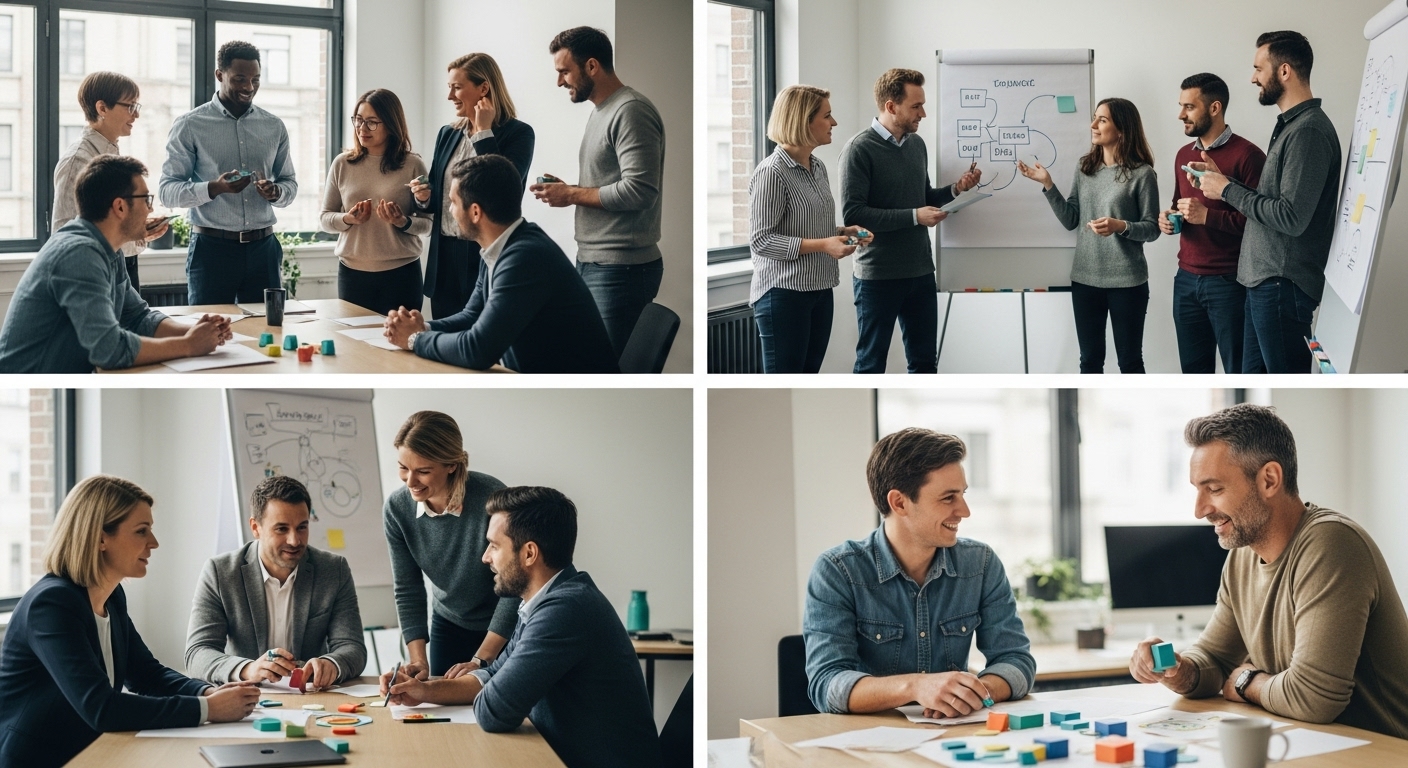
Team building sounds like trust falls and awkward get-to-know-you games. Think again. Studies show that teams who use structured activities experience up to 30 percent better collaboration. Surprising, right? The real secret is in the strategy behind these activities, revealing talents and connections hiding beneath the surface.
| Takeaway | Explanation |
|---|---|
| Icebreaker games foster connections | Engage employees in activities to break barriers and promote understanding among team members. |
| Outdoor activities enhance team bonding | Shared experiences in nature build trust, teamwork, and communication skills in a relaxed setting. |
| Problem-solving workshops improve collaboration | Structured discussions and scenarios enhance team effectiveness by building shared understanding and strategies. |
| Community service strengthens team spirit | Volunteering together fosters empathy and creates a sense of shared purpose beyond workplace roles. |
| Feedback sessions promote open communication | Create an environment that encourages constructive dialogue, enhancing team performance and engagement. |
Team building activities are crucial for creating a collaborative and supportive work environment. Icebreaker games serve as powerful tools to help team members break down initial barriers, reduce tension, and establish genuine connections. These strategic interactions go beyond simple entertainment, providing opportunities for colleagues to understand each other’s communication styles, personalities, and strengths.
Designing effective icebreaker games requires thoughtful consideration of team dynamics and goals. According to Cornell University’s Organizational Behavior Research, successful team building activities should promote mutual understanding and create a safe space for interaction. The best icebreakers encourage participation, generate positive energy, and reveal unique aspects of team members’ personalities.
Some proven icebreaker strategies that can transform workplace interactions include:
Two Truths and a Lie: Each participant shares three statements about themselves, with one being false. Colleagues must guess the lie, encouraging storytelling and creating memorable moments.
Human Bingo: Create bingo cards with unique personal characteristics or experiences. Team members must find colleagues who match each square, promoting active communication and discovery.
Quick Team Challenges: Short, collaborative problem solving exercises that require quick thinking and teamwork, such as building the tallest structure using limited materials.
These activities work best when they are voluntary, inclusive, and designed to match the team’s specific context. Managers should observe interactions, noting how team members communicate, support each other, and approach challenges. By creating a comfortable, engaging environment, icebreaker games lay the groundwork for more effective collaboration and mutual respect in professional settings.
Remember that the goal is not just entertainment, but creating meaningful connections that translate into improved workplace communication and productivity. When team members feel comfortable with each other, they are more likely to share ideas, provide constructive feedback, and work together seamlessly.
Outdoor team building activities provide a unique opportunity to break free from traditional workplace environments and foster genuine connections among team members. By engaging in shared experiences outside the office, colleagues can develop deeper understanding, trust, and collaborative skills in a more relaxed and natural setting.
Research from Stanford University’s Organizational Behavior Department demonstrates that outdoor activities can significantly enhance team dynamics by reducing hierarchical barriers and promoting equal participation. These experiences create memorable interactions that translate into improved workplace communication and mutual respect.
Some powerful outdoor team bonding activities include:
Scavenger Hunt: Design a complex challenge requiring strategic thinking, communication, and collaborative problem solving across different terrain or urban environments.
Obstacle Course Challenge: Create physical and mental challenges that demand teamwork, mutual support, and collective strategy to complete successfully.
Outdoor team building goes beyond simple recreation. Purposeful activities can help team members discover complementary skills, understand individual strengths, and develop more nuanced communication strategies. These experiences reveal leadership potential, adaptability, and interpersonal dynamics that might remain hidden in traditional office settings.
When designing outdoor team activities, consider several critical factors. First, ensure inclusivity by selecting challenges that accommodate different physical abilities and comfort levels. Second, maintain a positive, supportive atmosphere where participation feels voluntary and enjoyable rather than mandatory or competitive.
The most effective outdoor team bonding experiences blend physical engagement, strategic thinking, and opportunities for genuine interaction. By stepping outside familiar workplace structures, teams can build resilience, improve problem solving skills, and create lasting connections that enhance overall organizational performance.
Careful planning and thoughtful execution transform outdoor activities from simple recreational events into powerful team development opportunities. The key is creating experiences that feel engaging, meaningful, and aligned with broader team growth objectives.
Problem-solving workshops represent a strategic approach to team building that directly enhances organizational effectiveness by transforming challenges into collaborative learning opportunities. These structured activities go beyond traditional team exercises, creating environments where creativity, critical thinking, and collective intelligence can flourish.
According to Harvard Business Review’s Organizational Development Research, effective problem-solving workshops can dramatically improve team performance by developing shared mental models and enhancing communication strategies. The goal is not merely to solve specific challenges but to build long-term collaborative capabilities that teams can apply across various professional contexts.
Key elements of successful problem-solving workshops include:
Simulated Real-World Scenarios: Design challenges that mirror actual workplace complexities, requiring teams to apply genuine strategic thinking and collaborative skills.
Diverse Team Composition: Intentionally mix team members from different departments, skill levels, and backgrounds to promote innovative perspectives and cross-functional understanding.
Critical workshop design principles focus on creating psychologically safe environments where team members feel comfortable sharing ideas, challenging assumptions, and exploring unconventional solutions. This approach requires facilitators who can guide discussions, manage potential conflicts, and ensure inclusive participation.
Structuring these workshops demands careful consideration of team dynamics, organizational goals, and individual learning styles. Facilitators should develop scenarios that progressively increase in complexity, allowing teams to build confidence and develop more sophisticated collaborative strategies.
The most transformative problem-solving workshops incorporate reflection and debriefing sessions. These discussions help teams understand their collaborative processes, identify individual and collective strengths, and develop actionable insights for future teamwork.
Ultimately, problem-solving workshops are not about finding perfect solutions but about cultivating a collaborative mindset. By creating spaces where team members can experiment, learn from failures, and collectively develop innovative approaches, organizations can build more resilient, adaptive, and high-performing teams.
Volunteer work offers a profound opportunity for teams to connect beyond professional boundaries, creating meaningful experiences that transcend traditional workplace interactions. By engaging in community service, teams can develop deeper empathy, shared purpose, and collective social responsibility while building stronger interpersonal relationships.
Research from Stanford Social Innovation Review demonstrates that collaborative volunteer experiences significantly enhance team cohesion, communication skills, and organizational commitment. These activities provide unique environments where hierarchical structures dissolve, and team members can interact authentically and supportively.
Effective volunteer initiatives should consider several strategic approaches:
Local Community Projects: Select volunteer opportunities that align with team values and provide tangible community impact, such as environmental cleanup, food bank support, or community center assistance.
Skill-Based Volunteering: Leverage team members’ professional expertise to support nonprofit organizations, creating meaningful contributions that utilize individual strengths.
Intentional volunteer experiences transform traditional team building by connecting professional skills with social purpose. When teams work together toward shared humanitarian goals, they develop deeper mutual understanding and create lasting memories that strengthen workplace relationships.
Successful volunteer initiatives require careful planning and inclusive selection. Organizations should survey team members about their interests, ensure voluntary participation, and provide meaningful opportunities that resonate with diverse individual motivations. The goal is creating experiences that feel genuinely inspiring rather than mandatory.
Beyond immediate team benefits, volunteer work communicates powerful organizational values. It demonstrates a commitment to social responsibility, employee development, and community engagement. Teams that volunteer together often report increased job satisfaction, enhanced collaborative skills, and a more positive workplace culture.
The most transformative volunteer experiences are those that challenge team members, provide opportunities for personal growth, and create genuine connections. By stepping outside professional comfort zones and working collectively toward meaningful social goals, teams can develop resilience, empathy, and a shared sense of purpose that extends far beyond typical workplace interactions.
Creative artistic experiences offer powerful platforms for team development, transforming traditional collaborative approaches by unlocking innovative thinking and emotional intelligence. By engaging in artistic activities, team members can explore new communication channels, break down professional barriers, and discover unique dimensions of collective creativity.
According to The Journal of Business and Psychology, artistic team building activities stimulate brain regions associated with innovation, empathy, and collaborative problem solving. These experiences provide safe spaces for team members to experiment, take risks, and express themselves beyond conventional workplace communication styles.
Key artistic experiences that enhance team creativity include:
Group Mural Painting: Collaborative visual art projects that require collective planning, negotiation, and synchronized creative expression.
Improvisation Workshops: Theatrical exercises that develop spontaneity, active listening, and non verbal communication skills.
Structured artistic experiences can reveal hidden team dynamics and individual strengths that might remain unnoticed in traditional professional settings. By removing performance pressures and introducing playful creative challenges, teams can develop more flexible, supportive interaction patterns.
Designing effective artistic team building requires careful facilitation. Facilitators must create inclusive environments that accommodate different comfort levels with artistic expression, ensuring no team member feels marginalized or overly exposed. The objective is not artistic perfection but collaborative exploration and mutual understanding.
Artistic experiences also provide unique opportunities for emotional intelligence development. Team members learn to read non verbal cues, practice empathy, and understand diverse perspectives through shared creative processes. These skills directly translate into more effective workplace communication and collaborative problem solving.
Ultimately, creative artistic experiences transcend mere entertainment. They represent sophisticated team development tools that unlock collective potential, challenge existing communication patterns, and create memorable shared experiences that strengthen organizational culture and interpersonal connections.
Sports events represent a dynamic approach to team building, offering structured opportunities for colleagues to engage in physical challenges that promote collaboration, strategic thinking, and mutual respect. By introducing controlled competitive environments, organizations can unlock powerful team development mechanisms that transcend traditional workplace interactions.
Research from The American Journal of Health Promotion indicates that team sports activities significantly enhance group cohesion, communication skills, and collective motivation. These experiences create natural platforms for understanding individual strengths, developing trust, and building resilient interpersonal relationships.
Effective sports team building strategies include:
Interdepartmental Tournament: Organize mixed-team competitions that intentionally blend employees from different organizational units.
Adaptive Sports Challenges: Design inclusive physical activities accommodating various fitness levels and abilities, ensuring everyone can participate meaningfully.
Carefully designed sports events transform competitive interactions into collaborative learning experiences. The focus shifts from winning to understanding team dynamics, supporting each other, and developing collective strategies. Successful implementations prioritize inclusivity and mutual enjoyment over strict performance metrics.
Understanding individual team members’ physical and psychological comfort levels becomes crucial when planning sports events. Facilitators must create environments that feel supportive, voluntary, and aligned with broader organizational culture. The most effective sports team building experiences balance physical challenge with emotional safety, allowing participants to explore their capabilities without feeling pressured or marginalized.
Beyond immediate team interactions, sports events communicate powerful organizational values. They demonstrate a commitment to employee wellness, personal development, and holistic team growth. Teams that engage in shared physical challenges often report increased mutual understanding, enhanced communication skills, and a more positive workplace atmosphere.
The transformative potential of sports events lies in their ability to reveal hidden team strengths. By stepping outside professional comfort zones and engaging in physical challenges, team members can discover complementary skills, develop deeper empathy, and create lasting connections that extend far beyond traditional workplace boundaries.
Feedback sessions represent a critical team building mechanism that transforms traditional hierarchical communication structures into collaborative, transparent environments of mutual growth and understanding. By creating structured opportunities for open dialogue, organizations can develop more resilient, adaptive, and emotionally intelligent teams.
According to Harvard Business Review’s Organizational Communication Research, well-designed feedback sessions can dramatically improve team performance, employee engagement, and overall organizational effectiveness. These deliberate communication experiences enable team members to share perspectives, address challenges, and develop collective solutions.
Key principles for effective feedback sessions include:
Psychological Safety: Establish environments where team members feel secure expressing thoughts without fear of judgment or professional repercussions.
Balanced Dialogue: Create structured interactions that ensure equal participation, preventing dominant personalities from overshadowing quieter team members.
Intentional feedback approaches recognize communication as a multidimensional process involving verbal and non verbal elements. Successful sessions go beyond simple critique, focusing on constructive dialogue that empowers individual and collective growth. The goal is creating transparent communication cultures that view feedback as a collaborative learning opportunity.
Facilitating meaningful feedback sessions requires sophisticated interpersonal skills. Moderators must maintain neutrality, guide conversations productively, and help team members transform potential conflicts into opportunities for mutual understanding. Active listening becomes crucial, with facilitators demonstrating genuine interest in diverse perspectives.
The most transformative feedback experiences challenge traditional top down communication models. By creating horizontal dialogue spaces, teams can break down hierarchical barriers, develop more authentic professional relationships, and cultivate a culture of continuous improvement and mutual respect.
Ultimately, feedback sessions are not mere administrative exercises but powerful team building tools.
The table below provides a comprehensive summary of the 7 effective team building activities discussed in the article, highlighting the main focus, primary benefits, and essential implementation tips for each strategy.
| Team Building Activity | Main Focus | Key Benefits | Implementation Tips |
|---|---|---|---|
| Icebreaker Games | Build connections among team members | Break barriers, reveal personalities, boost communication | Make voluntary, inclusive, and context-matched |
| Outdoor Activities | Team bonding in a relaxed setting | Enhance trust, teamwork, and communication | Ensure inclusivity, positive and supportive atmosphere |
| Problem-Solving Workshops | Collaborative problem solving and learning | Improve collaboration, critical thinking, shared understanding | Use real-world scenarios, mix team diversity |
| Volunteer Work | Strengthen team spirit and empathy | Foster shared purpose, deeper relationships, social responsibility | Align with team values, offer meaningful opportunities |
| Creative Artistic Experiences | Unlock team creativity and innovation | Stimulate innovation, empathy, flexible communication | Use inclusive facilitation, focus on collective growth |
| Sports Events | Promote healthy competition and camaraderie | Boost motivation, trust, group cohesion | Prioritize inclusivity, balance challenge/safety |
| Feedback Sessions | Foster open and constructive communication | Develop resilience, transparency, continuous improvement | Create psychological safety, ensure balanced dialogue |
| They provide platforms for personal and collective development, enabling teams to continuously refine communication strategies, address emerging challenges, and build more resilient, adaptive organizational cultures. |
Are you looking to build stronger teams and connections while managing challenging relocations? The strategies from “7 Effective Team Building Activities for Success” highlight how communication, trust, and collaboration can drive lasting results. But if your team faces the real-world challenge of transitioning an office, moving employees, or coordinating logistics under deadlines, the stress can disrupt even the best team spirit. This is where US Pro Logistics becomes your essential partner.
Let us help you create a smooth transition that supports team unity from start to finish. With US Pro Logistics, you gain access to tailored moving solutions for businesses, offices, and government entities. Our expert team understands that every successful relocation hinges on teamwork, open communication, and empathy—just like the activities featured in your article. Ready to maintain momentum and morale during your next move? Request a free quote or explore how our commercial moving services can keep your teams connected and stress free throughout every step. Act now and experience a move designed to enhance collaboration, not disrupt it.
Icebreaker games help to break down initial barriers, reduce tension, and establish genuine connections among team members. They encourage storytelling and help team members understand each other’s communication styles and strengths.
Outdoor activities foster trust and understanding among team members by providing a relaxed environment to engage in shared experiences. These activities help reduce hierarchical barriers, promote equal participation, and create lasting memories.
Successful problem-solving workshops should ensure a psychologically safe environment, include diverse team composition, and progressively increase challenge complexity. Facilitators should guide discussions and manage potential conflicts to encourage inclusive participation.
Volunteer work allows team members to connect beyond professional boundaries, fostering empathy and collective social responsibility. Engaging in community service together helps build deeper interpersonal relationships and enhances team cohesion.
USDOT 3664256 This number is required for any company that operates commercial vehicles in interstate commerce (across state lines). It helps identify and track the safety performance and compliance of transportation companies.
MC 1268070 This number is specifically for companies involved in the transportation of goods or passengers for hire across state lines. It’s necessary for carriers operating in the moving industry and ensures they are authorized to operate as interstate carriers.

