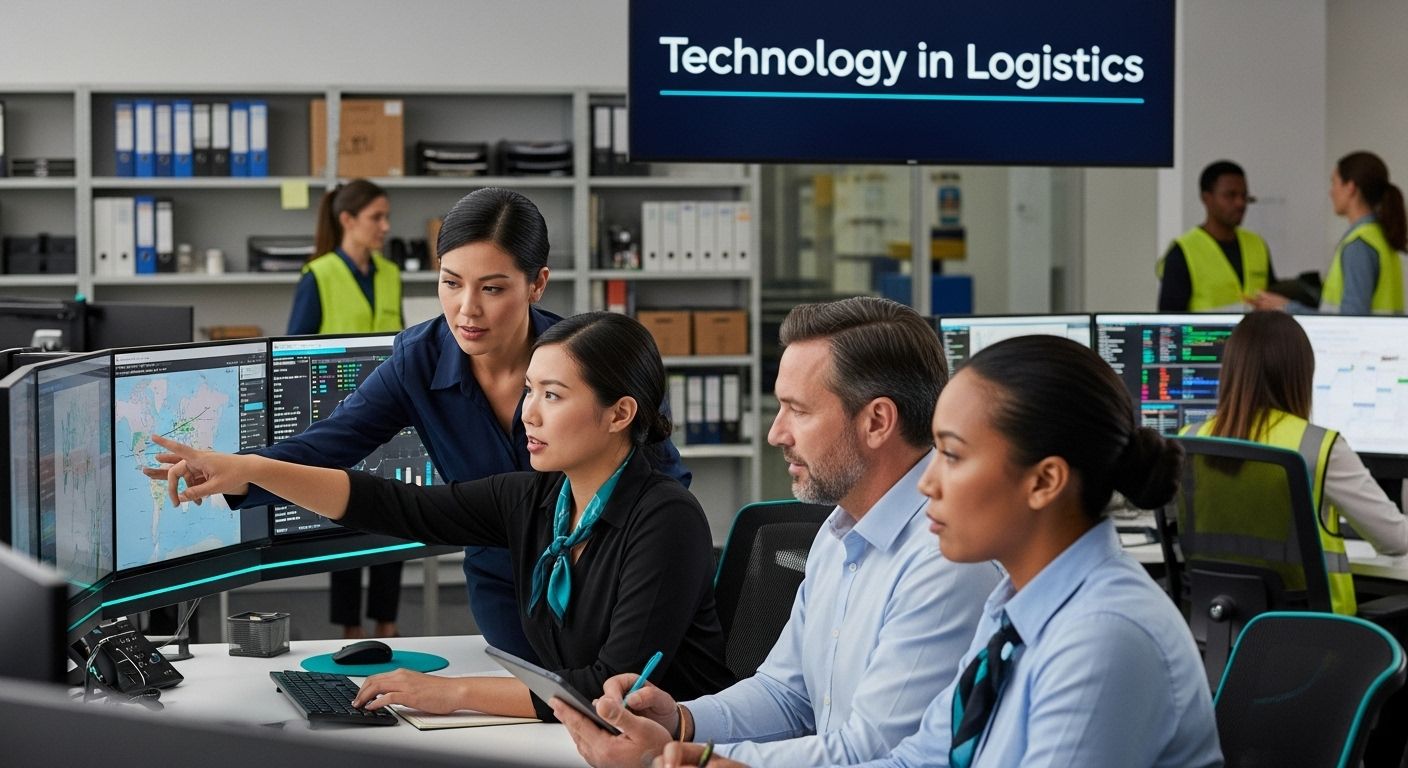
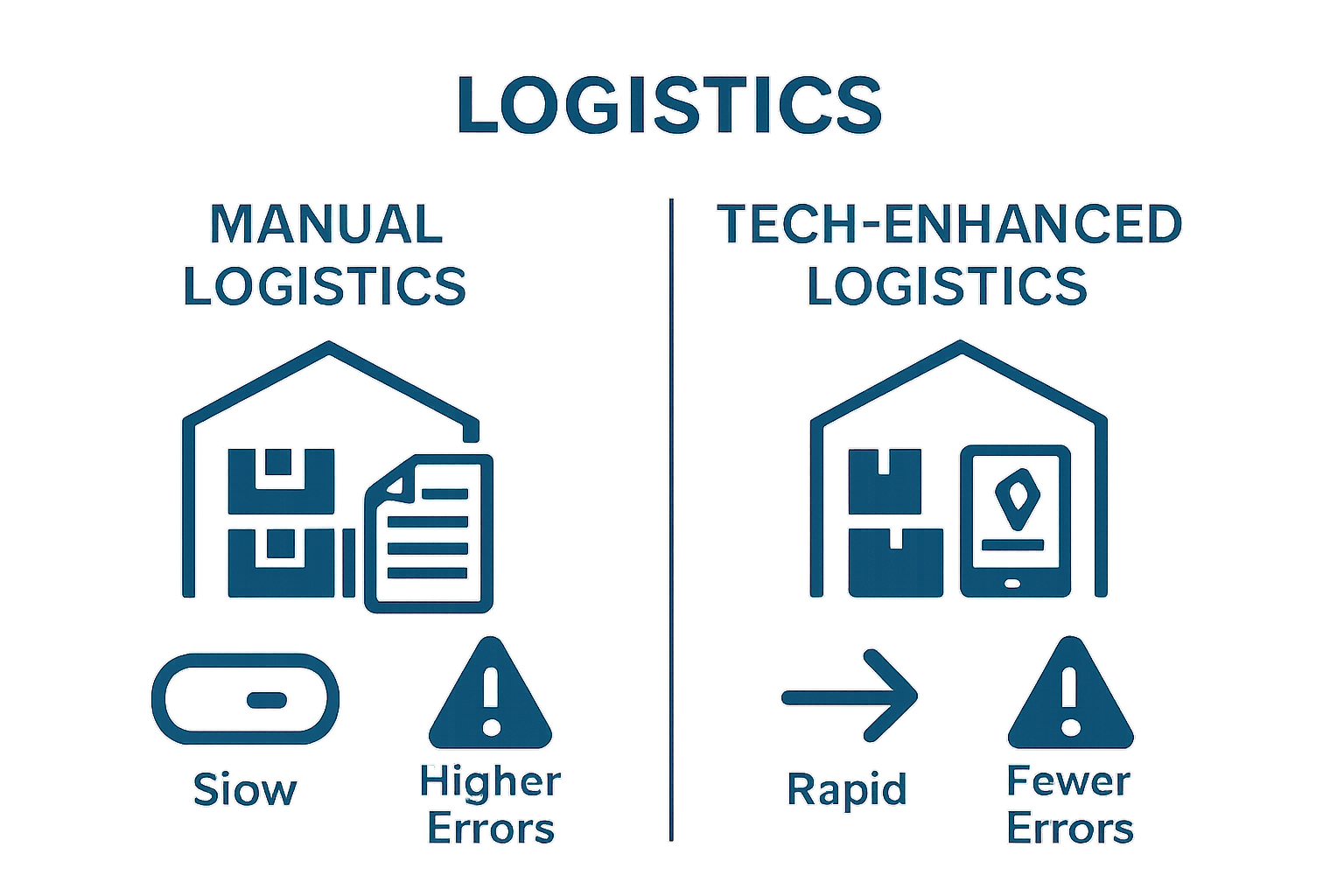
Logistics is getting a serious upgrade with technology. Companies using intelligent tracking and automation have reported up to 40 percent faster processing times compared to old manual methods. You might think the biggest win is speed, but the real change is how tech is turning logistics into a strategic advantage that’s smarter, greener, and far more reliable than ever before.
| Takeaway | Explanation |
|---|---|
| Technology enhances operational efficiency. | Automation and data analytics significantly reduce processing time and errors in logistics operations. |
| Real-time tracking improves transparency. | Advanced tracking systems provide stakeholders with up-to-date information, enhancing supply chain visibility and risk management. |
| AI drives predictive decision-making. | AI and machine learning enable companies to forecast demand and optimize logistics strategies effectively. |
| Sustainability is a vital focus. | Technological innovations support eco-friendly practices, reducing carbon footprints and promoting sustainable logistics solutions. |
| Emerging technologies reshape logistics. | Innovations like autonomous vehicles and blockchain are transforming traditional logistics models into more efficient systems. |
Technology has become a transformative force in modern logistics, fundamentally reshaping how businesses manage, track, and execute supply chain operations. The role of technology in logistics extends far beyond simple mechanization, representing a comprehensive approach to enhancing efficiency, transparency, and strategic decision making.
In the contemporary logistics landscape, technology serves as a critical enabler of operational excellence. Research from industry experts reveals that emerging technologies like autonomous vehicles, drones, and advanced communication networks are revolutionizing traditional logistics models. These technological innovations provide unprecedented capabilities in tracking, managing, and optimizing complex supply chain processes.
Key technological interventions in logistics include:
The integration of smart technologies transforms logistics from a purely operational function into a strategic asset. Big data analytics and artificial intelligence enable organizations to extract actionable insights from massive datasets, allowing for more precise decision making. By leveraging machine learning algorithms, companies can predict potential disruptions, optimize resource allocation, and significantly reduce operational inefficiencies.
Industry research demonstrates that technological innovations are not just about improving speed and accuracy but also about creating sustainable, environmentally conscious logistics solutions. Internet of Things (IoT) platforms, blockchain technologies, and advanced tracking systems contribute to more transparent, accountable, and eco-friendly supply chain management.
While technology offers immense potential, organizations must carefully assess implementation strategies, considering factors like initial investment costs, system compatibility, and long-term scalability. The most successful logistics operations view technology not as a replacement for human expertise, but as a powerful tool that augments human capabilities and drives strategic innovation.
In today’s complex global marketplace, technology has become an indispensable catalyst for transforming logistics operations from traditional manual processes to sophisticated, data-driven systems. The critical role of technology extends far beyond mere operational convenience, representing a strategic imperative for businesses seeking competitive advantage and operational excellence.
Research from the National Academies Press demonstrates that real-time logistics management (RTLM) is fundamental to modern operational success. Technological solutions enable organizations to plan, execute, monitor, and rapidly adapt logistics strategies with unprecedented precision. By integrating advanced information systems, companies can:
Advanced technologies have revolutionized supply chain transparency, providing stakeholders with comprehensive insights into every stage of logistics operations. Internet of Things (IoT) sensors, GPS tracking, and blockchain technologies create an interconnected ecosystem where information flows seamlessly across different platforms and geographic boundaries. This enhanced visibility allows businesses to:
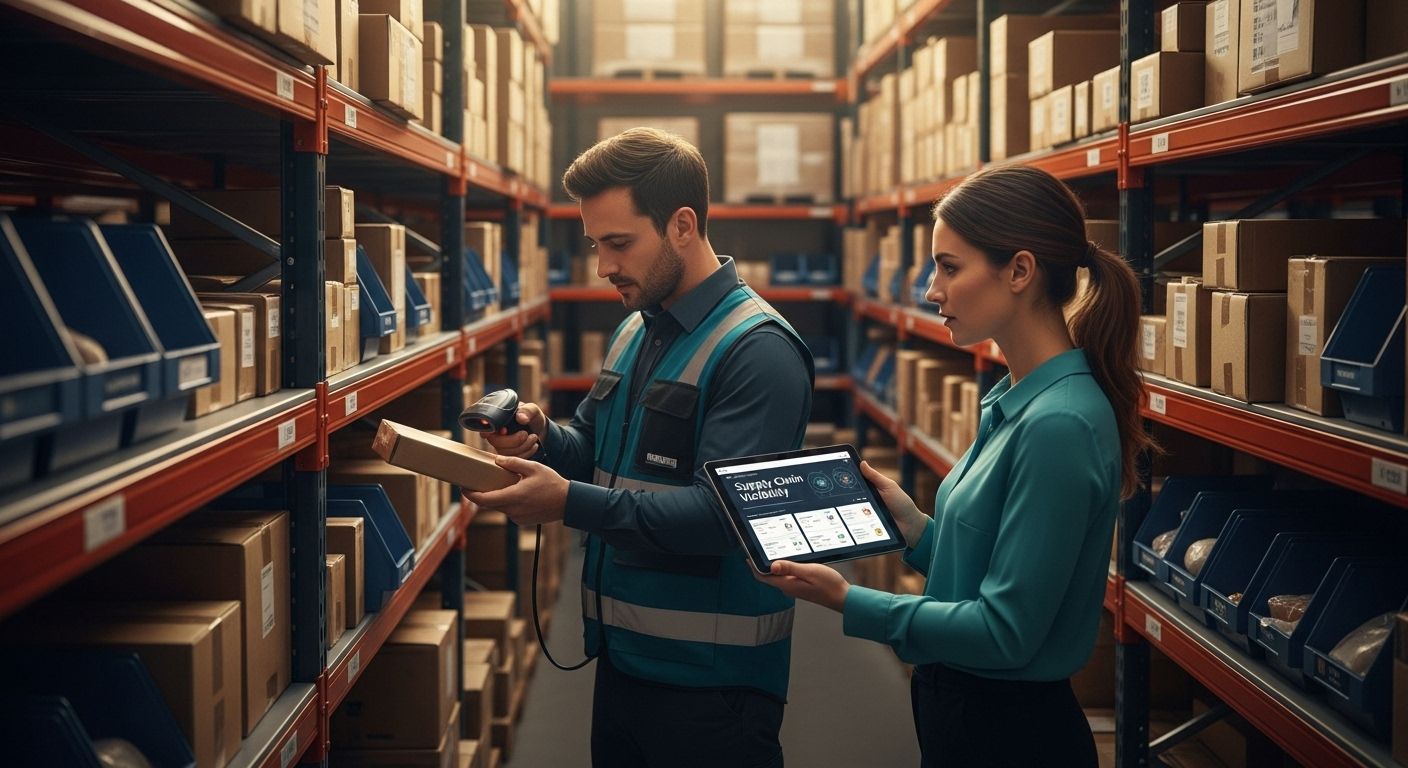
Experts from the World Economic Forum emphasize that information and computing technologies are no longer optional but essential for transportation and logistics companies. The integration of sophisticated technological solutions directly correlates with improved business growth, operational efficiency, and customer satisfaction.
Modern logistics organizations recognize that technology is not just a support function but a core strategic driver. By embracing digital transformation, companies can create more agile, responsive, and intelligent logistics ecosystems that adapt quickly to changing market dynamics and customer expectations.
The modern logistics landscape is undergoing a radical transformation driven by technological innovations that are redefining traditional operational paradigms. Emerging technologies are not just incrementally improving logistics processes but fundamentally reimagining how supply chains function, communicate, and deliver value.
Research from the University of the Cumberlands reveals that autonomous vehicles, drones, and advanced communication networks are revolutionizing logistics infrastructure. These technologies provide unprecedented capabilities in tracking, managing, and optimizing complex supply chain processes. Key technological enablers include:
Artificial Intelligence (AI) and machine learning are transforming logistics from reactive to predictive operational models. By analyzing massive datasets, AI algorithms can forecast demand, optimize routing, and identify potential disruptions before they occur. These intelligent systems enable businesses to:
Supply Chain Resource Cooperative research highlights five transformative technologies: Blockchain, Quantum Computing, Digital Twins, Generative Agents, and the Internet of Things (IoT). These technologies are creating more transparent, efficient, and resilient logistics ecosystems.
For businesses looking to dive deeper into advanced logistics technologies, learn more about our specialized freight delivery solutions that leverage cutting-edge technological innovations.
To clarify the main technological trends and their contributions to logistics, the table below summarizes the key emerging technologies shaping the industry and highlights their primary impacts on logistics operations.
| Technology | Description | Key Impact on Logistics |
|---|---|---|
| Artificial Intelligence (AI) | Machine learning for analytics, forecasting, and optimization | Enables predictive decision-making and strategic planning |
| Internet of Things (IoT) | Connected sensors and devices for real-time tracking | Improves shipment visibility and operational transparency |
| Blockchain | Decentralized ledger for secure data sharing | Enhances transparency and tamper-proof recordkeeping |
| Autonomous Vehicles & Drones | Self-driving vehicles and delivery drones | Boosts delivery speed and reduces labor costs |
| Advanced Communication Networks | 5G and real-time data transmission platforms | Enables instant data exchange and reliable connectivity |
| Digital Twins & Simulation | Virtual replicas for scenario planning and process optimization | Enhances predictive maintenance and system efficiencies |
| As technological capabilities continue to evolve, organizations that strategically integrate these advanced systems will gain significant competitive advantages in an increasingly complex global marketplace. |
In the rapidly evolving logistics landscape, technology has become a critical lever for driving operational efficiency and transforming traditional productivity models. Digital innovations are no longer optional add-ons but fundamental components that determine an organization’s competitive edge and operational excellence.
Research from the Information Technology and Innovation Foundation demonstrates that automating logistics processes can dramatically enhance labor productivity and operational workflows. Advanced technologies enable organizations to:
Artificial intelligence and machine learning algorithms have revolutionized resource allocation by providing unprecedented insights into complex logistics operations. These intelligent systems analyze massive datasets to:
The Federal Highway Administration highlights how intelligent freight technologies enhance reliability and service quality. By implementing sophisticated tracking and monitoring systems, logistics organizations can achieve:
Learn more about our advanced freight management technologies that leverage these cutting-edge efficiency solutions. As technological capabilities continue to evolve, businesses that strategically integrate intelligent systems will not just survive but thrive in an increasingly competitive global marketplace.
The table below provides a quick comparison of how technology enhances different areas of efficiency and productivity in logistics, outlining the core features and resulting business benefits.
| Area of Enhancement | Technological Feature | Business Benefit |
|---|---|---|
| Processing Speed | Automation & Robotics | Faster order fulfillment |
| Resource Management | AI & Predictive Analytics | Optimal inventory and workforce allocation |
| Transparency & Tracking | IoT & Real-Time Monitoring | Greater supply chain visibility |
| Performance Measurement | Data Analytics & Dashboards | Informed strategic decisions |
| Error Reduction | Automated Quality Control | Fewer manual errors and improved accuracy |
The logistics industry stands at the precipice of a technological revolution, with emerging innovations promising to fundamentally reshape how goods are tracked, transported, and managed. Technological convergence is no longer a distant prospect but an imminent reality that will redefine operational strategies across global supply chains.
Research from Georgia Tech’s Manufacturing Institute reveals the transformative potential of advanced robotic and AI technologies in logistics. Emerging autonomous systems are set to revolutionize traditional operational models by:
Decentralized technologies are poised to create more resilient and flexible logistics ecosystems. Advanced digital platforms will enable organizations to:
The U.S. Department of Transportation’s Volpe Center highlights the convergence of technological innovation with sustainability objectives. Future logistics technologies will focus on:
Explore our innovative freight delivery approaches that are already preparing for these technological transformations. As the logistics landscape continues to evolve, organizations that proactively embrace these emerging technologies will not just adapt but lead the next generation of supply chain innovation.
Is your business struggling with slow shipments, limited tracking, or a lack of transparency in your supply chain? The article highlighted how real-time data, automation, and intelligent tracking are reshaping logistics for greater efficiency and reliability. But knowing about these advancements is only the first step—the bigger challenge is finding a partner who actually puts them into practice.
Explore our logistics solutions that bring the latest technology into every move and delivery. Our team uses smart tracking and advanced planning to keep your business ahead.

Ready to leave outdated processes in the past? Discover how US Pro Logistics can deliver secure, transparent, and personalized moving or freight services for your home or business. Request your custom quote now and see how easy logistics can be when powered by technology and backed by a family-owned company you can trust.
Technology serves as a transformative force in logistics, enabling enhanced efficiency, real-time tracking, predictive analytics, and streamlined communication throughout the supply chain.
Big data analytics provides actionable insights from large datasets, allowing organizations to optimize resource allocation, predict disruptions, and enhance decision-making processes in logistics.
Key technologies include artificial intelligence, Internet of Things (IoT), blockchain, autonomous vehicles, and advanced communication networks, all contributing to improved supply chain processes.
Real-time visibility enhances supply chain transparency, allowing businesses to monitor shipments, predict disruptions, ensure product quality, and improve overall customer communication.
USDOT 3664256 This number is required for any company that operates commercial vehicles in interstate commerce (across state lines). It helps identify and track the safety performance and compliance of transportation companies.
MC 1268070 This number is specifically for companies involved in the transportation of goods or passengers for hire across state lines. It’s necessary for carriers operating in the moving industry and ensures they are authorized to operate as interstate carriers.

