
Moving to a new place nearby might sound simple, but even a local move can turn your plans upside down if you skip the prep. Organizing your life into boxes is more than just sorting and packing. Studies show that decluttering before moving can cut your costs by up to 30 percent. Not what you expect from just cleaning out your closet. The real trick is, with a solid checklist, that chaos quickly flips into one of the smoothest moves you’ll ever have.
| Takeaway | Explanation |
|---|---|
| Start planning 4-6 weeks ahead. | Begin your moving preparations early to ensure everything is organized and ready on moving day. |
| Declutter to save time and money. | Categorize items into keep, donate, and discard to reduce moving volume and costs. |
| Label boxes clearly for easy unpacking. | Use detailed labels or a color-coded system to help you locate items quickly after the move. |
| Arrange for utility transfers in advance. | Ensure that electricity, water, and internet services are scheduled to avoid disruptions on arrival. |
| Create a “first-night” essentials box. | Pack a separate box with important items you’ll need immediately upon arrival at your new home. |
Moving locally might seem straightforward, but without a systematic approach, the process can quickly become overwhelming. A well-organized local moving checklist transforms a potentially chaotic experience into a smooth, manageable transition. This comprehensive guide will walk you through each critical stage of your local move, ensuring no detail is overlooked.
The foundation of a successful local move begins with meticulous planning. Experts recommend starting your preparation at least 4-6 weeks before your moving date. Begin by creating a dedicated moving folder where you can consolidate all essential documents, estimates, contracts, and checklists.
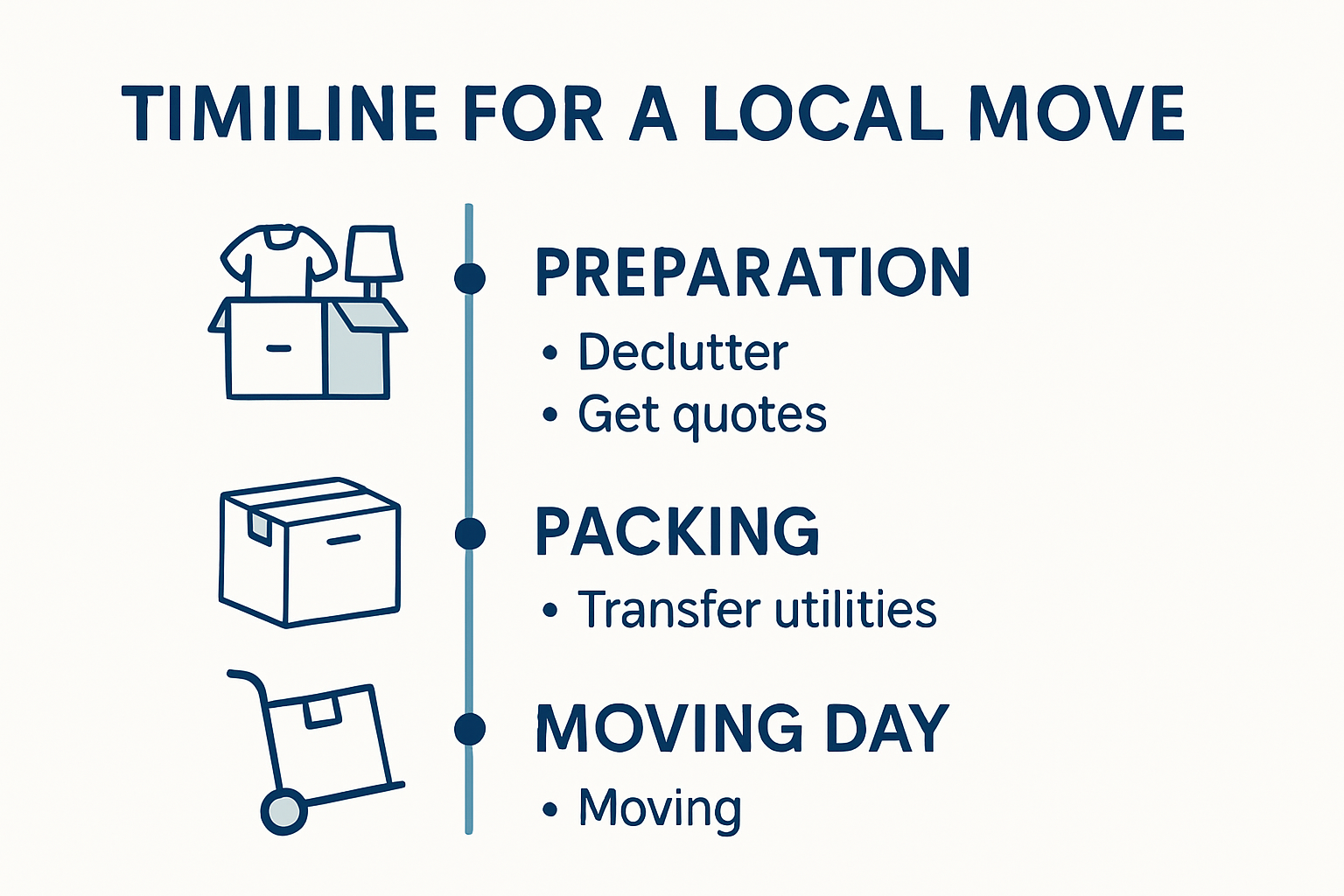
Start by taking a comprehensive inventory of your belongings. Walk through each room and categorize items into three groups: keep, donate, and discard. This initial sorting not only reduces moving volume but also helps you understand the scope of your move. According to professional organizers, decluttering can reduce moving costs by up to 30%.
Next, research and obtain multiple quotes from reputable local moving companies. Compare their services, pricing, and customer reviews. Verify their credentials, including USDOT numbers and insurance coverage. Don’t hesitate to ask detailed questions about their process, potential additional fees, and handling of specialty items.
Packing is more than just throwing items into boxes. Strategic packing can protect your belongings and streamline the moving process. Invest in quality packing materials: sturdy boxes, bubble wrap, packing paper, and strong packing tape. Begin with items you use least frequently, such as seasonal clothing, books, and decor.
Label each box clearly with its contents and the room it belongs in. Create a color-coded system or use a detailed inventory list to track your boxes. Pack a separate “first-night” box with essentials like toiletries, a change of clothes, important documents, chargers, and basic kitchen items. This box should be easily accessible and transported separately.
Arrange for utilities to be transferred or disconnected at your current residence and set up at your new home. This includes electricity, water, internet, gas, and any other essential services. Schedule these changes to align with your moving date to ensure a seamless transition.
On moving day, be prepared and stay organized. Have a folder with all necessary documents, contact information for movers, and your inventory list. Do a final walkthrough of your current home to ensure nothing is left behind. Take photos of valuable items before the move for insurance purposes.
After arriving at your new home, prioritize unpacking critical areas like the bedroom and kitchen. Unpack your first-night box immediately to settle in quickly. Check all delivered items against your inventory list and report any damages or missing items to the moving company promptly.

Remember, a local move requires careful planning and execution. By following this comprehensive local moving checklist, you can minimize stress and ensure a smooth transition to your new home. Check out our guide on handling local moves for more detailed insights.
Take a deep breath. You’ve got this.
Moving can present unique challenges for different groups and organizations. Whether you’re a business relocating your office, a military family preparing for a transfer, or a senior citizen planning a downsizing move, specialized strategies can make the transition smoother and less stressful.
Corporate moves require meticulous planning and coordination. According to the Federal Motor Carrier Safety Administration, businesses must take several critical steps to ensure a successful relocation. Start by creating a comprehensive moving committee responsible for overseeing every aspect of the transition.
Establish a detailed inventory of all office equipment, furniture, and technological assets. This includes computers, servers, specialized machinery, and confidential documents. Develop a systematic approach to packing and labeling that minimizes disruption to daily operations. Research from the University of California, Berkeley suggests assigning specific roles to team members and creating a timeline that allows for minimal business interruption.
Consider the technological infrastructure of your new space. Coordinate with IT departments to ensure seamless transfer of network systems, phone lines, and internet connectivity. Plan for potential downtime and develop contingency strategies to maintain business continuity during the move.
Military families and government employees face distinct moving challenges. The frequent relocations require a more adaptable approach to moving. Create a detailed moving binder that includes all essential documents, including moving orders, personal identification, and medical records. Coordinate closely with military or government moving coordinators to understand specific protocols and reimbursement procedures.
Senior citizens require special consideration during moves. Focus on minimizing stress and physical strain. Work with moving professionals who specialize in senior relocations. This might involve additional services like packing, unpacking, and helping to organize the new living space. Consider the accessibility of the new location and potential modifications needed to ensure comfort and safety.
Certain moves involve transporting sensitive or specialized equipment. The U.S. Forest Service Move Handbook emphasizes the importance of proper planning for unique items. For businesses, this might include laboratory equipment, medical devices, or confidential documents. For individuals, it could mean preserving antique furniture, musical instruments, or valuable artwork.
Consult with moving specialists who have experience with your specific type of move. Request custom crating for fragile or high-value items. Ensure proper insurance coverage and document the condition of special items before transportation. Learn more about our specialized moving services to understand how we can support unique moving needs.
Each move tells a unique story. By understanding the specific requirements of your group or organization, you can transform a potentially stressful experience into a smooth, well-organized transition. Preparation, attention to detail, and working with experienced professionals are key to a successful move.
Packing is more than simply placing items into boxes. It is a strategic process that can significantly impact the efficiency and safety of your move. By understanding key packing principles, you can protect your belongings, reduce stress, and ensure a smoother transition to your new home.
Packing for a move requires strategy and attention to detail. Here is a summary table comparing packing tips and special considerations for different types of items, helping you organize your approach based on the article’s recommended packing methods.
| Item Type | Recommended Packing Method | Special Considerations |
|---|---|---|
| Fragile items | Wrap individually in bubble wrap/packing paper | Fill empty box spaces to prevent shifting |
| Electronics | Use original packaging or specialty boxes | Keep cables/accessories together; back up data |
| Artwork/Antiques | Custom crating or specialty boxes | Document condition; consider insurance |
| Important Documents | Waterproof, portable containers | Create digital backups; keep with you |
| Heavy items | Use small boxes | Easier transportation and avoids box breakage |
| Clothing/Bedding | Vacuum-sealed bags | Saves space during move |
| Essentials | “First-night” box, labeled and separate | Pack toiletries, clothes, chargers, kitchen items |
Effective packing begins with quality materials and a systematic approach. According to the Federal Emergency Management Agency, proper organization and documentation are critical when preparing to move or manage important belongings. Invest in high-quality packing supplies: sturdy boxes of various sizes, bubble wrap, packing paper, strong packaging tape, and permanent markers.
Start by gathering supplies well in advance. Purchase more materials than you initially estimate to avoid last-minute rushes. Consider specialty boxes for fragile items like dishes, artwork, and electronics. Use original packaging for electronics when possible, as these provide the most secure protection. Wrap delicate items individually in bubble wrap or packing paper, ensuring no empty spaces exist within boxes to prevent shifting during transport.
Create a detailed inventory system. Number each box and maintain a corresponding list that details its contents. This practice not only helps during unpacking but also provides a crucial record for insurance purposes. Take photographs of valuable items before packing as additional documentation.
Approach packing systematically by tackling one room at a time. Begin with areas least used in your home, such as storage spaces, guest rooms, and seasonal areas. Pack non-essential items first, leaving daily necessities for last. This method reduces household disruption and makes the process more manageable.
Prioritize items based on their fragility and frequency of use. Pack heavy items in smaller boxes to prevent them from becoming unmanageable. Use clothing, towels, and linens as additional padding for breakable items. Vacuum-sealed bags can compress clothing and bedding, saving significant space during the move.
For each room, create a “first-night” box containing essentials you’ll need immediately upon arrival. Include items like toiletries, a change of clothes, basic kitchen supplies, important documents, chargers, and basic cleaning supplies. This box should be clearly labeled and transported separately from other moving containers.
Some items require extra attention and specialized packing techniques. Electronics, artwork, antiques, and musical instruments demand careful handling. Use original packaging when available, or invest in custom crating for high-value items. Disconnect and properly secure electronic devices, keeping all cables and accessories together.
Handle important documents with particular care. Create digital backups of critical papers and store physical copies in waterproof, portable containers. Keep these documents with you during the move rather than placing them in moving trucks. Learn more about protecting your valuables during relocation.
Remember that proper packing is an investment in the safety of your belongings. Take your time, be methodical, and don’t hesitate to seek professional advice for particularly valuable or complex items. A well-packed move is the foundation of a stress-free relocation experience.
Moving day represents the culmination of weeks of planning and preparation. Understanding what to expect can transform a potentially stressful experience into a smooth, well-orchestrated transition. From the arrival of movers to the final moments of loading, being prepared and informed is key to a successful moving day.
Moving day can be hectic if you’re not prepared. The following table breaks down step-by-step actions you should complete on moving day, based on the guidance in the article. Use this as a quick-reference checklist to minimize stress and ensure nothing is missed.
| Step | Description | Status (To Do/Done) |
|---|---|---|
| Pack all boxes and label clearly | Ensure every box is securely packed and labeled | To Do |
| Prepare a personal essentials kit | Gather critical items you’ll carry with you | To Do |
| Clear paths for movers | Remove obstacles and protect floors and walls | To Do |
| Confirm mover details | Verify arrival time, address, and contact info | To Do |
| Conduct final walkthrough | Check every room for forgotten items | To Do |
| Oversee loading process | Guide movers and track items as they’re loaded | To Do |
| Check inventory list | Match each item and box to your inventory documentation | To Do |
| Secure home and schedule utilities | Turn off lights, lock up, arrange utility transfers | To Do |
According to Yale University’s Household Moving Checklist, being present and prepared is crucial on moving day. Start early by ensuring all boxes are packed, labeled, and easily accessible. Create a clear path for movers by removing obstacles and protecting floors and walls with protective coverings.
Prepare a personal essentials kit that stays with you throughout the move. This should include important documents, medications, chargers, a change of clothes, basic toiletries, and any valuable items you prefer to transport personally. Keep this kit separate from other moving boxes to ensure easy access.
Confirm all logistical details with your moving company the day before. Verify the arrival time, confirm the destination address, and ensure they have accurate contact information. Have a copy of your inventory list and moving contract readily available for reference.
AARP’s Moving Checklist recommends actively overseeing the loading process. As movers arrive, conduct a final walkthrough of your home. Check each room carefully to ensure nothing is left behind. Be present during the loading to answer questions and provide guidance about special handling for fragile or valuable items.
Carefully review the inventory sheet as items are loaded. Each box and piece of furniture should be documented, with any existing damages noted. Take photographs of valuable items as they are loaded, providing an additional record for insurance purposes. Ask the moving team about their process for handling delicate items and secure transportation methods.
Prepare your home for departure by ensuring utilities are scheduled for disconnection. The Washington Consumers’ Checkbook suggests confirming utility transfers, cable, internet, and phone services are properly arranged. Clean surfaces, do a final meter reading, and ensure all windows and doors are secured.
Maintain clear communication with your moving team throughout the day. Provide them with your contact information and the exact address of your new location. If you’re not driving with the movers, exchange contact details and confirm estimated arrival times.
Before leaving, do a comprehensive final walkthrough. Check closets, cabinets, and storage areas one last time. Turn off all lights, lock all doors, and ensure the property is left in the condition specified in your lease or sale agreement.
Learn more about managing your moving day with our comprehensive moving guide.
Remember, moving day is a transition between two chapters of your life. Stay calm, organized, and flexible. With proper preparation and a positive attitude, you can transform what could be a stressful day into an exciting new beginning.
Your moving checklist should include tasks such as creating a timeline, taking inventory of your belongings, arranging utility transfers, packing strategies, and preparing an essentials box for the first night.
Begin by categorizing items into three groups: keep, donate, and discard. This not only reduces the volume of items to move but can also significantly cut moving costs.
Wrap fragile items individually in bubble wrap or packing paper, and fill any empty space in boxes to prevent shifting. Consider using specialty boxes for added protection.
Prepare a personal essentials kit, confirm logistics details with your moving company, conduct a final walkthrough of your home, and oversee the loading process to ensure nothing is overlooked.
Struggling to keep your local move organized or worried about overlooked details? Our moving checklist highlights just how easy it is for even nearby relocations to become chaotic, whether it’s forgotten utility transfers, missed packing steps, or unexpected moving costs. When the pressure to protect your belongings and minimize stress is high, having reliable support by your side makes all the difference.

This is where US Pro Logistics shines. As a proven leader in residential and commercial moving services, we bring expertise and personalized solutions that address the exact pain points described in our checklist. We simplify every step, from careful packing to safe delivery, so you can relax and focus on settling into your new space. Visit US Pro Logistics to get a fast, transparent quote and experience the peace of mind that comes from a trusted local moving partner. The sooner you start, the sooner your move becomes the effortless transition you deserve.
USDOT 3664256 This number is required for any company that operates commercial vehicles in interstate commerce (across state lines). It helps identify and track the safety performance and compliance of transportation companies.
MC 1268070 This number is specifically for companies involved in the transportation of goods or passengers for hire across state lines. It’s necessary for carriers operating in the moving industry and ensures they are authorized to operate as interstate carriers.

